


Can Heirloom Seeds Grow in Containers? Yes, Here's How
07:00 AMLast Updated: November 7, 2026
Quick Summary
Yes, heirloom seeds grow well in containers, so can heirloom seeds grow in containers is answered with a simple yes when you get three things right: pot size, potting mix, and water. Match the pot to the plant's mature root spread, use a light potting mix rather than garden soil, and water deeply whenever the top 2-3 cm of mix feels dry.
- Start tomatoes and peppers indoors 6 to 8 weeks before your last frost date.
- Cherry tomatoes need a 12 in x 12 in pot holding 4-5 gal of soil.
- Water deeply until it runs out the bottom, checking twice a day in hot weather.
- Feed container plants every 2 to 3 weeks with a balanced liquid fertilizer.
- Ferment tomato seed in a small jar of water for 3-5 days before drying.
Table of Contents
- Can Heirloom Seeds Grow in Containers?
- How to Grow Heirloom Vegetables in Containers
- Container Size for Vegetables: Match the Pot to the Root
- The Best Heirloom Tomatoes for Pots
- Container Gardening Soil and Watering That Actually Works
- Beans, Greens, and Herbs: More Heirloom Crops for Small Spaces
- Troubleshooting and Saving Seed From Container Heirlooms
- Pick a Patio or Backyard Kit and Start Planting
- Frequently Asked Questions
Can Heirloom Seeds Grow in Containers?
Yes, heirloom seeds grow well in containers. The short answer is that heirloom seeds grow in containers just as they do in open ground, as long as you get three things right: pot size, potting mix, and water. ARK Seed Kits offers collections suited to balconies, patios, and backyards.
Container gardening is not a compromise. It is a different set of rules. Once you learn those rules, heirloom vegetables, herbs, and flowers perform beautifully in pots and grow bags. Below, we walk through the whole process, from seed to harvest to saving seed for next year.
How to Grow Heirloom Vegetables in Containers
Growing heirloom vegetables in containers follows a simple path: start seeds indoors or on a warm patio, move seedlings into the right-size pot, water and feed on a steady schedule, and support tall plants as they grow. The details matter more in a pot than in the ground, because roots have nowhere to escape.
The good news is that container gardening is forgiving. You control the soil, the water, and the sun.
Start With the Right Seed and Timing
Begin with fresh, high-quality seed and plant at the right time for your climate.
Timing depends on the crop:
- Tomatoes and peppers: start indoors 6 to 8 weeks before your last frost
- Beans and cucumbers: sow directly once the soil is warm
- Lettuce, radish, and other cool-season crops: sow early, then again in late summer
If you are new to this, our organic heirloom seeds for beginners guide walks through seed selection and timing in plain language.
Transplanting Seedlings Without Shock
Seedlings often stall after transplanting, and the usual cause is root shock. Move plants when they have two sets of true leaves, water them in well, and keep them out of harsh midday sun for a few days.
A few habits prevent most problems:
- Harden seedlings off over 5 to 7 days before they move outside
- Water the hole before you set the plant in it
- Bury tomato stems deeper than they grew in the tray
- Keep the root ball intact; do not tease roots apart
Container Size for Vegetables: Match the Pot to the Root
Container size for vegetables is the single most common mistake we see. A plant in a pot that is too small becomes root-bound, dries out fast, and produces little. Match the pot to the plant's mature root spread, not to the size of the seedling you are planting.
| Crop | Minimum Pot Size (width x depth) | Soil Volume | Plants per Pot | Realistic Yield per Plant | Notes |
|---|---|---|---|---|---|
| Cherry tomatoes | 12 in x 12 in | 4-5 gal | 1 | 3-5 lb over the season | Needs a cage or stake; indeterminate types need 5 gal minimum |
| Full-size tomatoes | 16 in x 16 in | 6-8 gal | 1 | 5-10 lb over the season | Determinate or dwarf varieties perform best; use a sturdy cage |
| Bush beans | 10 in x 10 in | 2-3 gal | 3-5 | 1-2 lb per pot | No support needed; succession sow every 3 weeks |
| Pole beans | 14 in x 14 in | 5 gal | 2-3 | 2-3 lb per pot | Add a 6-ft trellis; harvest over a longer window |
| Peppers | 12 in x 12 in | 3-4 gal | 1 | 4-8 peppers per plant | Compact varieties like California Bell work well |
| Lettuce and greens | 8 in x 6 in | 1-2 gal | 3-4 | 1-2 harvests per pot | Shallow roots; succession sow for continuous cut-and-come-again |
| Herbs | 8 in x 8 in | 1-2 gal | 1 | 4-6 cuttings per plant | Good drainage is key; basil and cilantro are thirstier than rosemary |
| Cucumbers | 14 in x 14 in | 5 gal | 1 | 6-10 fruits per plant | Provide a trellis; pickling types are compact |
| Radishes | 8 in x 6 in | 1 gal | 6-8 | 6-8 roots per pot | Ready in 25-30 days; ideal for succession planting |
Soil Volume
Bigger is almost always better. A larger pot holds more moisture, stays cooler at the roots, and gives you a buffer on hot days. For tomatoes, a 5-gallon grow bag is the practical minimum for cherry types; full-size heirlooms need 7-10 gallons to reach their potential.
Watch out: a pot that is too wide but too shallow will let roots circle the bottom and dry out quickly; depth matters as much as width for tomatoes, peppers, and beans.
The Best Heirloom Tomatoes for Pots
The best heirloom tomatoes for pots are compact, determinate, or dwarf varieties that stay manageable in a container. Cherry types are the safest bet for beginners, because they set fruit early and keep producing.
Varieties suited to container growing include the Red Cherry Tomato, which is included in the Patio Seed Kit.
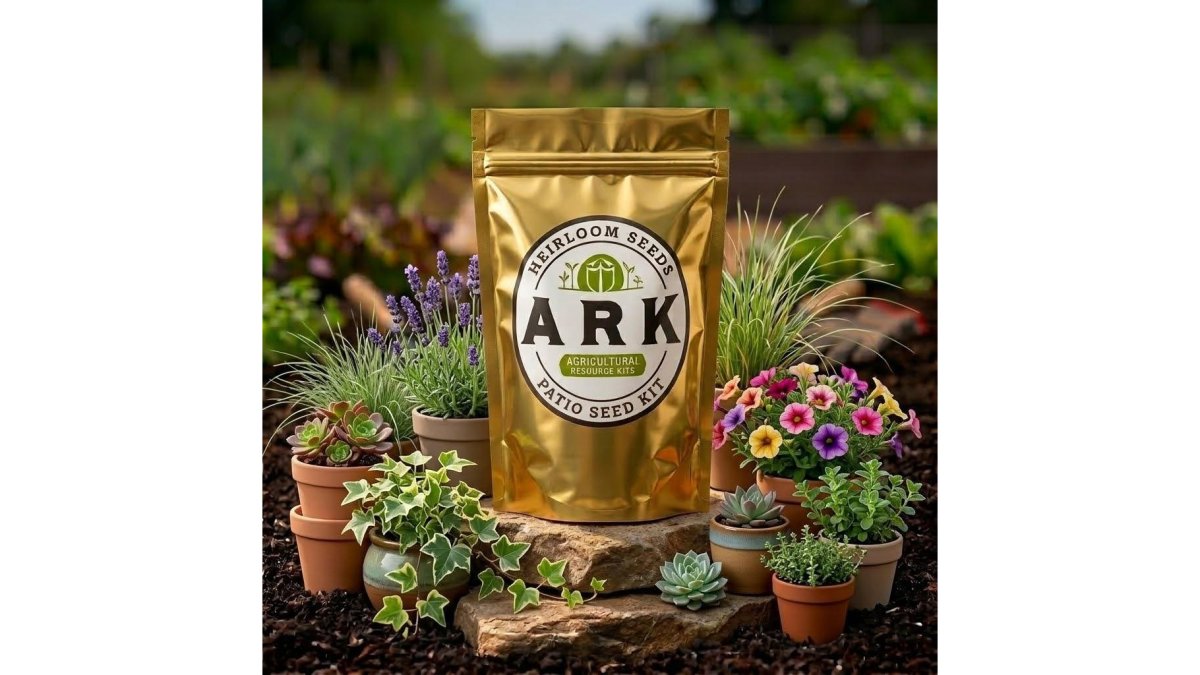
Use a sturdy cage or a single stake. A full-grown tomato plant loaded with fruit gets heavy, and a pot offers no anchor. For more variety ideas, see our list of the best heirloom seeds to plant.

Container Gardening Soil and Watering That Actually Works
Container gardening soil should be a light potting mix, never garden soil or topsoil. Garden soil compacts in a pot, drains poorly, and can carry weed seed and disease. A good potting mix holds moisture while letting excess water run through.
Watering is one of the most important parts of container gardening. Pots dry out fast, especially in summer sun and wind.
- Water when the top 2-3 cm of mix feels dry
- Water deeply until it runs out the bottom
- Check twice a day in hot weather
- Feed every 2 to 3 weeks with a balanced liquid fertilizer
- Never let pots sit in standing water
Drainage holes are not optional. If a pot has none, drill them or use it as a decorative outer sleeve.
Beans, Greens, and Herbs: More Heirloom Crops for Small Spaces
Beans, greens, and herbs are the workhorses of a small container garden. Bush beans need no support and crop fast. Pole beans climb a trellis and give you more harvest from the same floor space. Salad greens and radishes mature in weeks, which makes them perfect for succession planting.
Herbs deserve their own pots. Basil, cilantro, dill, and parsley grow well on a sunny windowsill or balcony, and fresh herbs cost far less when you grow them yourself.
A simple rotation keeps pots productive:
- Start cool-season crops early
- Follow with beans or herbs in summer
- Sow greens again in late summer for a fall harvest
Can Heirloom Seeds Grow in Containers?
Heirloom seeds grow in containers when the pot matches the plant, the mix drains well, and watering stays consistent. Compact varieties and dwarf cultivars make the job easier. Small spaces reward smart choices more than big effort.
For tight spaces, our guide on growing food in small spaces covers vertical and container setups in more depth.
Troubleshooting and Saving Seed From Container Heirlooms
Most container problems trace back to water, light, or roots. The table below covers the most common issues and container-specific fixes.
| Problem | Likely Cause | Container-Focused Fix |
|---|---|---|
| Blossom-end rot on tomatoes | Calcium deficiency from uneven watering | Water deeply and consistently; add a layer of mulch to hold moisture; do not over-fertilize with nitrogen |
| Poor pollination | Low airflow or few pollinators on a patio | Hand-pollinate with a small brush or shake the plant gently at midday; avoid insecticides during bloom |
| Leggy seedlings | Insufficient light | Move seedlings closer to a grow light (2-3 in above the leaves) or provide 6-8 hours of direct sun; brush the tops daily to strengthen stems |
| Yellow lower leaves | Overwatering or nitrogen leaching | Let the top 2-3 in of mix dry out between waterings; feed with a balanced liquid fertilizer every 2-3 weeks |
| Wilting at midday that persists into evening | Root-bound or dry | Check the root ball; if roots circle the pot, upsize to a larger container; water until it runs out the bottom |
| Pests (aphids, whiteflies) | Crowded plants, poor airflow | Space pots at least 12 in apart; rinse pests off with a strong stream of water; use insecticidal soap as a last resort |
Watch out: plants that stop growing in mid-season are often root-bound, and the fix is to move them into a larger container before the roots circle the pot.
Seed saving closes the loop. For container-grown heirlooms, isolation is easier because you control the space. Beans and peppers are the simplest: let the pods or fruits fully mature on the plant, then dry the seed at room temperature for 1-2 weeks before storing in a cool, dark place. Tomatoes need a little more work: ferment the seed in a small jar of water for 3-5 days to remove the gel sack, then rinse and dry. Our beginner guide to saving heirloom seeds covers the full process step by step, including isolation distances for each crop.
Pick a Patio or Backyard Kit and Start Planting
You do not need a big yard to grow heirloom food. You need the right seed, the right pot, and a plan. That is exactly what our kits are built for.
The Patio Seed Kit suits balconies and small patios, with over 2,000 seeds including Red Cherry Tomato, California Bell Pepper, Boston Pickling Cucumber, Berry Belle Radish, Salad Bowl Lettuce, basil, and cilantro. The Backyard Seed Kit scales up for larger spaces with over 20,000 seeds across dozens of vegetable and herb varieties.
Containers put fresh, organic heirloom food within reach, even on a balcony. ARK Seed Kits makes that first step simple with organic, non-GMO heirloom seed collections packed for long-term storage, plus a Seed Guide that teaches you to grow, harvest, and save your own seed. Get started with ARK Seed Kits and turn your patio into a reliable source of homegrown food.
Frequently Asked Questions
Can heirloom seeds grow in containers?
Yes. Heirloom seeds grow in containers as well as any hybrid, as long as the pot is large enough and drains freely. The main differences are soil volume and watering frequency, not the seed itself. Choose compact or dwarf varieties for small pots, fill with a light potting mix rather than garden soil, and keep the mix evenly moist. A patio or balcony with six to eight hours of direct sunlight is enough for tomatoes, peppers, beans, and most herbs.
What size container do heirloom vegetables need?
Container size for vegetables depends on the root system. Herbs and lettuce do fine in 1 to 2 gallon pots, bush beans and radishes need about 3 gallons, and peppers want 3 to 5 gallons. Tomatoes and cucumbers need the most room, roughly 5 to 10 gallons per plant, with a cage or trellis for support. Anything smaller than 1 gallon dries out too fast in summer heat and leaves plants root-bound before harvest.
Can you save seeds from heirloom vegetables grown in containers?
Yes, and container growing makes it easier to keep varieties pure. Because pots sit apart from each other, cross-pollination between varieties is less likely than in an open garden bed. Let tomatoes and beans ripen fully past eating stage, scoop or shell the seed, ferment tomatoes for a few days, then dry the seed completely before storing it in a sealed, cool, dark container. Seed from container-grown heirlooms stays viable for years when dried and stored properly.
How often should you water heirloom plants in pots?
In summer, most container heirlooms need water once a day, and sometimes twice during heat waves. Pots dry out faster than garden beds because they hold less soil volume and warm up on all sides. Check moisture by pushing a finger an inch into the mix; water when it feels dry at that depth. Water until it runs out the drainage holes, and never let pots sit in a full saucer, since soggy roots kill plants faster than a missed watering.


