


9 Best Seed Varieties for a Four-Season Home Garden
07:00 AMQuick Summary
The best seed varieties for a four season home garden are matched to each season's temperatures: slow-bolting lettuce and spinach in spring, heat-set tomatoes and peppers in summer, quick crops and hardy greens for fall, and cold-tolerant kale under cover for winter. Choose by days to maturity, cold or heat tolerance, and whether the variety is open-pollinated.
- Sow cool-season crops like lettuce and spinach early, since they tolerate light frost.
- Choose slow-bolting types such as Buttercrunch lettuce and Bloomsdale spinach for longer spring harvests.
- Sow radishes every 10 to 14 days to fill gaps between slower crops.
- Direct-sow peas and spinach, because transplanting usually sets them back.
- Pick heat-set tomatoes like Heatmaster or Solar Fire when nights stay above roughly 75°F.
Table of Contents
- How to Choose Seed Varieties for a Four Season Garden
- Spring Varieties: Cool-Season Crops to Start Early
- Summer Varieties: Heat-Tolerant Crops That Hold Up
- Fall Garden Vegetables to Plant for a Late Harvest
- Best Seeds for a Winter Garden Under Cover
- Heirloom Seeds for Home Gardens: Saving and Regrowing Your Harvest
- Building Your Year-Round Planting Plan With ARK Seed Kits
- Frequently Asked Questions
How to Choose Seed Varieties for a Four Season Garden
Last Updated: November 9, 2026
Choosing the best seed varieties for a four season home garden starts with one question: what can you plant, and when? A year-round harvest depends on matching each crop to the cool, warm, or cold weather it tolerates.
Start with your local frost dates and growing season length, then sort the best seed varieties for a four season home garden by how they handle temperature. Cool-season crops like lettuce, spinach, radishes, and peas tolerate light frost. Warm-season crops like tomatoes, peppers, and summer squash need reliable heat. Days to maturity tells you whether a variety can finish before the weather turns.
Check for these traits when you compare seed packets:
- Days to maturity: Shorter times suit short seasons and succession planting.
- Cold or heat tolerance: Matches the variety to your planting window.
- Slow to bolt: Keeps greens like lettuce and spinach usable longer.
- Open-pollinated versus hybrid: Open-pollinated seed can be saved; hybrids usually cannot be grown true from saved seed.
Many home gardeners find that a simple season-by-season chart prevents most planting mistakes. A common approach is to list each crop, its planting window, and its expected harvest date before buying seed.
Spring Varieties: Cool-Season Crops to Start Early
Spring is when cool-season crops do their best work, but the difference between a thin harvest and a continuous one comes down to cultivar choice. The varieties below are widely grown open-pollinated or standard home-garden types chosen for bolt resistance, short maturity, or frost tolerance, the three traits that decide whether a spring sowing succeeds.
Lettuce. Choose slow-bolting types for the back half of spring. 'Buttercrunch' (bibb, about 65 days) and 'Salanova' types hold longer as days lengthen; 'Black Seeded Simpson' (about 45 days) is a fast loose-leaf for early sowings. Direct-sow or transplant at 2-3 weeks before the last frost; lettuce germinates best when soil is around 60-65°F and stalls above roughly 80°F.
Spinach. 'Bloomsdale Long Standing' (about 45 days) is the standard slow-bolting savoy type; 'Space' (about 40 days) is a smooth-leaf choice for baby-leaf harvests. Spinach bolts quickly once days exceed about 14 hours and soil warms, so sow it as early as the ground can be worked.
Radishes. 'Cherry Belle' (about 22 days) and 'French Breakfast' (about 25 days) mature fast enough to fill gaps between slower crops. Sow every 10-14 days; radishes turn pithy and bolt when stressed by heat or crowding.
Peas. 'Sugar Snap' (about 60-70 days) and 'Oregon Sugar Pod II' (about 60 days) are powdery-mildew-tolerant snow and snap types. Peas tolerate light frost as seedlings but stop setting pods when daytime temperatures climb past roughly 80°F, so early direct sowing matters more than transplanting.
Other spring workhorses. 'Packman' broccoli (about 55 days) and 'Snowball' cauliflower (about 60 days) can be started indoors 4-6 weeks before the last frost; both button up poorly if they mature in heat. 'Detroit Dark Red' beets (about 60 days) and 'Nantes' carrots (about 70 days) tolerate cool soil and can be direct-sown 2-4 weeks before the last frost.
Sow in succession. Plant a small batch every two weeks rather than all at once, so harvests overlap instead of arriving in a single flush. A useful rule of thumb: the faster a crop matures, the shorter its harvest window, so quick crops like radishes and loose-leaf lettuce deserve the most frequent repeat sowings.
Watch out: starting peas or spinach indoors and transplanting them usually sets them back, both resent root disturbance, so direct-sow them where they will grow.
The table below sums up the spring cool-season varieties covered above, with their approximate days to maturity and the key trait that suits each one.
| Crop | Variety | Key trait |
|---|---|---|
| Lettuce | Buttercrunch | Slow to bolt, about 65 days |
| Lettuce | Black Seeded Simpson | Fast loose-leaf, about 45 days |
| Spinach | Bloomsdale Long Standing | Slow-bolting savoy, about 45 days |
| Radishes | Cherry Belle | Quick maturity, about 22 days |
| Peas | Sugar Snap | Mildew-tolerant snap, about 60-70 days |
| Beets | Detroit Dark Red | Tolerates cool soil, about 60 days |
| Carrots | Nantes | Tolerates cool soil, about 70 days |
Days to maturity for spring cool-season varieties
Summer Varieties: Heat-Tolerant Crops That Hold Up
Summer favors warm-season crops, but the right cultivar depends on whether your constraint is a short season or sustained heat. The varieties below split along that line: short days-to-maturity types for cool-summer gardens, and heat-set or disease-resistant types for hot ones.
Tomatoes. For short seasons, 'Stupice' (about 60 days, open-pollinated) and 'Early Girl' (about 57 days) set fruit before summer ends. For heat, 'Heatmaster' and 'Solar Fire' are bred to set fruit when nights stay above roughly 75°F, a threshold where many heirlooms drop blossoms. 'Cherokee Purple' (about 80 days) is a flavor benchmark but sulks in sustained heat.
Peppers. 'California Wonder' (about 75 days) is the standard bell; 'Jalapeño' (about 70 days) and 'Cayenne' (about 70 days) handle heat better than most bells. Peppers set poorly when nights stay above about 80°F, so in hot climates choose smaller-fruited types that set more readily.
Summer squash. 'Dark Green Zucchini' (about 50 days) and 'Yellow Crookneck' (about 50 days) are productive but vulnerable to squash vine borer and powdery mildew. 'Tromboncino' (about 70 days) is a vining type with better mildew tolerance and a longer harvest.
Cucumbers. 'Marketmore 76' (about 60 days) is the standard slicer with good disease resistance; 'Diva' (about 55 days) is a mostly seedless, bitter-free type. In hot, humid summers, choose powdery-mildew-tolerant varieties and trellis them for airflow.
Sweet corn. 'Golden Bantam' (about 80 days) is the classic open-pollinated type; 'Incredible' (about 85 days) is a widely grown hybrid with good cold-soil vigor. Corn needs block planting for pollination, not single rows.
Eggplant. 'Black Beauty' (about 75 days) and 'Ichiban' (about 60 days, long Asian type) perform well in heat; eggplant is among the most heat-tolerant summer crops and sets fruit when tomatoes struggle.
Basil. 'Genovese' (about 70 days) is the standard pesto type; keep it pinched back to slow flowering and extend the harvest. Basil blackens below about 50°F, so don't rush it out.
Warm-season plants should not go out until nights stay reliably above the frost-free date, soil temperature above roughly 60°F matters as much as air temperature for tomatoes, peppers, and eggplant. Transplanting too early is one of the most common causes of stunted summer crops.
Watch out: in hot climates, blossom drop in tomatoes and peppers is usually a night-temperature problem, not a watering problem, switching to a heat-set cultivar solves more than extra irrigation.
Fall Garden Vegetables to Plant for a Late Harvest
Fall planting relies on counting backward from your first expected frost. Each crop needs enough days to mature before cold weather slows growth. Spinach, kale, arugula, and cabbage handle cooler temperatures well, and many gain sweetness after a light frost.
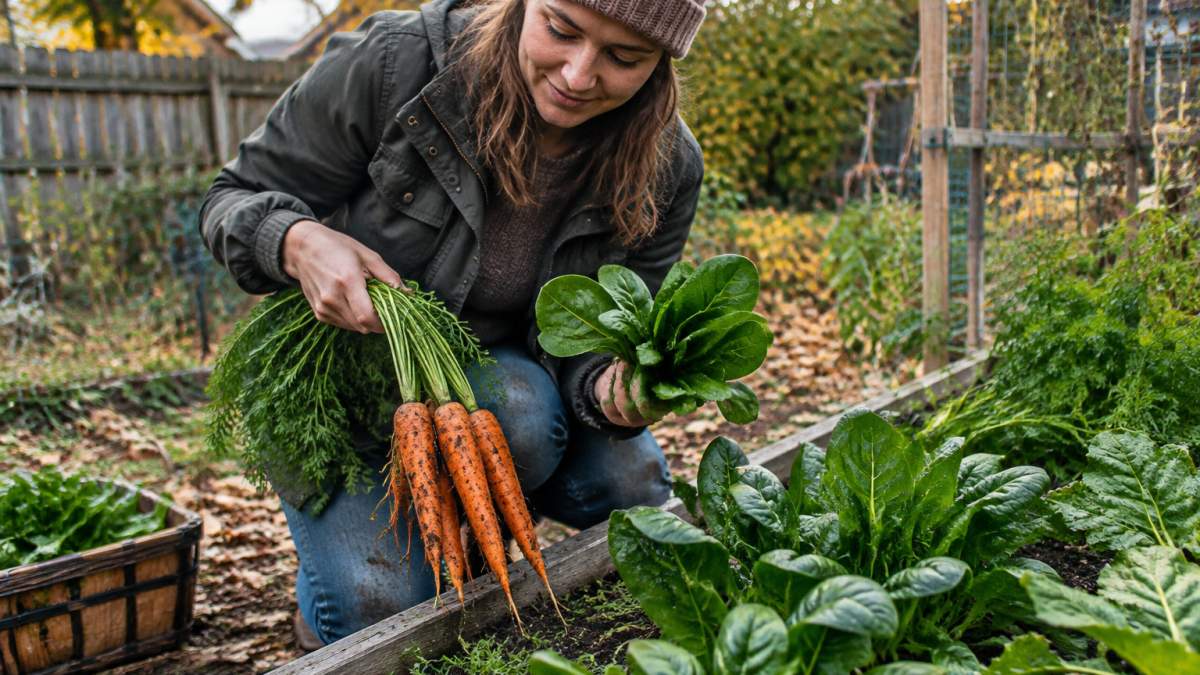
Sow fall crops in mid to late summer, once the heat of the season has eased. Seedlings started indoors may be needed for crops with long maturity periods. Cover young plants during unexpected cold snaps to extend the harvest by several weeks.
Carrots, beets, and turnips can stay in the ground into late fall, which makes them useful for a late harvest.
Best Seeds for a Winter Garden Under Cover
A winter garden depends on protection. Cold frames, low tunnels, and row covers let cool-season crops keep growing when outdoor temperatures drop. Hardy greens such as kale, spinach, and certain lettuces are the most reliable choices under cover.
Plant these crops early enough in fall that they establish before the coldest weather arrives. Growth slows sharply in deep winter, so expect a smaller harvest than in spring or fall.
Heirloom Seeds for Home Gardens: Saving and Regrowing Your Harvest
Heirloom, open-pollinated varieties let you save seed from one season and plant it the next. That makes them central to a sustainable four-season plan. Hybrids often produce uneven results from saved seed, so seed-saving works best with open-pollinated types.
For a home garden, save seed from healthy, well-performing plants. The beginner guide to saving heirloom seeds walks through each step. Let fruit fully ripen, dry seed thoroughly, and store it in a cool, dry place in labeled containers. Heirloom varieties also widen your options, since many older cultivars offer flavors and traits not found in standard hybrids.
If you plan to save seed, read the seed guide for each crop, since pollination habits differ. Some crops, such as squash, cross easily and need separation to stay true to type.
Building Your Year-Round Planting Plan With ARK Seed Kits
A full year of planting is easier when your seed comes from a single, organized source. The All-In-One Seed Kit is the most complete option. It contains many vegetables and herbs, and it includes the Seed Growing Guide.

The Backyard Seed Kit includes a range of vegetables and herbs for a home garden. For a simpler starting point, the Backyard Seed Kit offers a lighter alternative to the all-in-one option.

Use the Seed Growing Guide's planting chart to map each season. Assign crops to spring, summer, fall, and winter windows, then track harvest dates to see where gaps appear. Adjust next year's plan based on what grew well.
Frequently Asked Questions
How do you plant a four-season garden?
Plant in succession. Start cool-season crops like lettuce, spinach, radishes and peas in early spring as soon as the soil can be worked. Follow with heat-tolerant warm-season crops such as beans, peppers and tomatoes after the last frost date. In late summer, sow fall crops like kale, arugula and turnips so they mature as days shorten. For winter, use row cover or a cold frame to keep hardy greens such as kale and spinach producing. Check your local frost dates and days to maturity on each seed packet so each planting lands in its window.
Which vegetables can grow in a garden year-round?
Several crops handle more than one season when you match them to the right planting window. Kale, spinach, arugula, lettuce and carrots tolerate cold and can be grown in spring, fall and under cover in winter. Beets, radishes and turnips also fit multiple windows. Garlic and overwintering onions are planted in fall and harvested the following summer. Heat-loving crops like peppers and eggplant are not year-round outdoors in most US climates, so they belong to the summer rotation, not winter.
What are the best vegetables to plant for a winter harvest?
The most reliable winter harvest comes from cold-hardy crops that improve after light frost. Kale, Brussels sprouts, leeks, and parsnips are strong choices, and parsnips taste sweeter after exposure to cold. Spinach and lettuce can be harvested through winter under row cover or in a cold frame. Plant these in late summer so they establish before the weather cools. Expect slower growth in the coldest months, so plan a larger planting than you think you need.
Can you save seeds from heirloom vegetables for next year?
Yes, but only from open-pollinated heirloom varieties. Hybrid plants, marked F1 on seed packets, usually do not grow true to type from saved seed. Heirloom beans, peas, lettuce and tomatoes are largely self-pollinating, so they are the easiest to save. Squash, cucumbers and corn cross-pollinate, so keep distinct varieties isolated or hand-pollinate to preserve their traits. ARK Seed Kits includes a Seed Growing Guide with seed-saving instructions for the varieties in its kits.


