


How Do You Grow Calorie Dense Crops in a Small Backyard?
07:00 AMLast Updated: November 12, 2026
Quick Summary
Grow calorie dense crops by filling most of your beds with potatoes, sweet potatoes, dry beans, and winter squash, which return far more food energy per square foot than leafy greens. Plant them in full sun, loosen the soil first, and cure roots and squash before storing them cool and dry.
- Potatoes yield roughly 4,200 to 6,300 calories per 10 square feet, the highest of the crops listed.
- A 120-square-foot plan of three beds can produce roughly 30,000 to 46,000 calories in a good year.
- Keep about two-thirds of your growing space in storage calories and one-third in protein and fresh eating.
- Put the tallest crops on the north side so they don't shade shorter beds to their south.
- Cure winter squash and sweet potatoes in a warm, dry period before storage or they spoil fast.
Table of Contents
- Why Calorie Dense Crops Beat Salad Greens in a Small Backyard
- The Most Calorie-Dense Vegetables and Staple Crops to Plant
- High-Yield Crops for Small Spaces and How Many Calories They Return
- The Most Calorie Dense Crop per Acre and What It Means for a Backyard
- Planning a Survival Garden Layout for a Small Yard
- Step-by-Step: Planting, Growing, and Storing Your Calorie Crops
- Choosing Seeds for Your Calorie Garden
- Frequently Asked Questions
Why Calorie Dense Crops Beat Salad Greens in a Small Backyard
A small backyard can feed you, but only if you plant the right things. The difference between pretty beds of lettuce and real food comes down to one number: calories per square foot.
That matters when space is tight. If you're working with a balcony or patio instead of a yard, see our guide to growing vegetables in apartments. A bed of salad greens gives you a few light meals.
Calorie farming is the practice of growing crops for food energy and storage life, not just fresh eating. It changes how you plan every square foot.
The Most Calorie-Dense Vegetables and Staple Crops to Plant
The most calorie-dense vegetables for a home garden are starchy roots, dried beans, and winter squash. These staple crops store well and carry real substance. Here are the ones worth your space:
- Potatoes: reliable, heavy yielding, easy to store
- Sweet potatoes: warm-season roots with high energy content
- Dry beans: protein-rich and shelf-stable
- Winter squash: dense flesh that keeps for months
Potatoes, Sweet Potatoes, and Other Root Crops
Root crops earn their place in any survival garden. Potatoes are the workhorse: plant them in loose soil, hill them as they grow, and harvest a heavy crop in a modest bed. Sweet potatoes need warmth and a long season, but they reward you with dense, storable roots. Beets and parsnips round out the root crops and tolerate cool weather well.
A common mistake is planting potatoes in heavy, wet soil. They rot before they sprout. Loosen the bed and add organic matter first.
Beans, Corn, and Winter Squash
Beans, corn, and winter squash form the classic trio. Beans fix nitrogen in the soil, feeding the corn and squash beside them. Corn delivers carbohydrates, though it needs space and full sun to earn its keep. Winter squash sprawls, so give it room at the bed's edge and let it run. Asian long beans are a warm-weather option that keeps producing through summer heat.
High-Yield Crops for Small Spaces and How Many Calories They Return
High-yield crops for small spaces are the ones that pack food energy into every square foot. Potatoes and sweet potatoes top the list, followed by dry beans and winter squash. Leafy greens and tomatoes are fine additions, but they return far fewer calories per bed. The useful question is not which crop is biggest, it is which crop returns the most edible calories for the ground it occupies.
Calories per Square Foot, Crop by Crop
Use the table below as a planning estimate, not a guarantee. Yields assume decent soil, full sun, consistent watering, and a full growing season. Calories are for the edible portion as typically eaten (cooked for roots and squash, dry for beans and corn).
| Crop | Typical yield per 10 sq ft | Approx. calories per lb (edible) | Approx. calories per 10 sq ft | Space and timing notes |
|---|---|---|---|---|
| Potatoes | 12-18 lb | ~350 | 4,200-6,300 | 10-12 in between plants, 24-36 in rows; 90-120 days |
| Sweet potatoes | 8-12 lb | ~390 | 3,100-4,700 | Needs warm soil and 100-140 days; vines sprawl |
| Dry beans (bush) | 1.5-2.5 lb dry | ~1,500 | 2,250-3,750 | 4-6 in spacing; 85-100 days; fixes nitrogen |
| Winter squash | 15-25 lb | ~180 | 2,700-4,500 | 24-36 in between hills; vines need 3-4 ft of run |
| Sweet corn | 8-12 ears | ~350 per ear | 2,800-4,200 | Needs block planting for pollination; 70-100 days |
| Beets | 8-12 lb | ~200 | 1,600-2,400 | 3-4 in thinning; 50-70 days; tops are edible too |
| Kale and collards | 4-6 lb | ~150 | 600-900 | 12-18 in spacing; cut-and-come-again |
| Tomatoes | 15-25 lb | ~90 | 1,350-2,250 | 24-36 in spacing; trellis to save ground |
Approx. calories per 10 sq ft
A dense root crop feeds you through winter. A row of tomatoes gives you fresh eating for a few weeks. Both have value, but only one builds a food reserve. Track your planting density and choose crops that fill the pantry, not just the plate.
What Those Numbers Mean in a Real Backyard
A 4 ft by 8 ft bed is 32 square feet. Planted entirely to potatoes at the middle of the range above, that bed yields roughly 13,000-20,000 calories, enough to cover the starchy base of meals for one adult for several weeks, not a whole winter. Spread the same 32 square feet across potatoes, dry beans, and winter squash and you get a more balanced pantry: starch, protein, and storage squash that keeps for months.
A small-backyard calorie garden can offset grocery costs and build a reserve, but it will not replace the grocery store entirely.
A Quick Crop-Selection Checklist
- Does this crop store for months?
- Does it deliver real calories per square foot?
- Does it fit my sunlight and climate?
- Can I save seed from it?
Watch out: yields depend on growing conditions. Heavy clay soil, partial shade, or a short season can reduce yields, so plant a mix rather than betting the whole bed on one crop.
The Most Calorie Dense Crop per Acre and What It Means for a Backyard
That scale sounds huge, but the lesson scales down: density wins. A backyard plot planted densely with roots and beans outproduces a sprawling bed of low-calorie greens every season.
You do not need an acre to eat from your garden. You need smart planning. Focus your best soil and sunlight on the crops that return the most food energy, then use the edges for herbs and quick greens.
Planning a Survival Garden Layout for a Small Yard
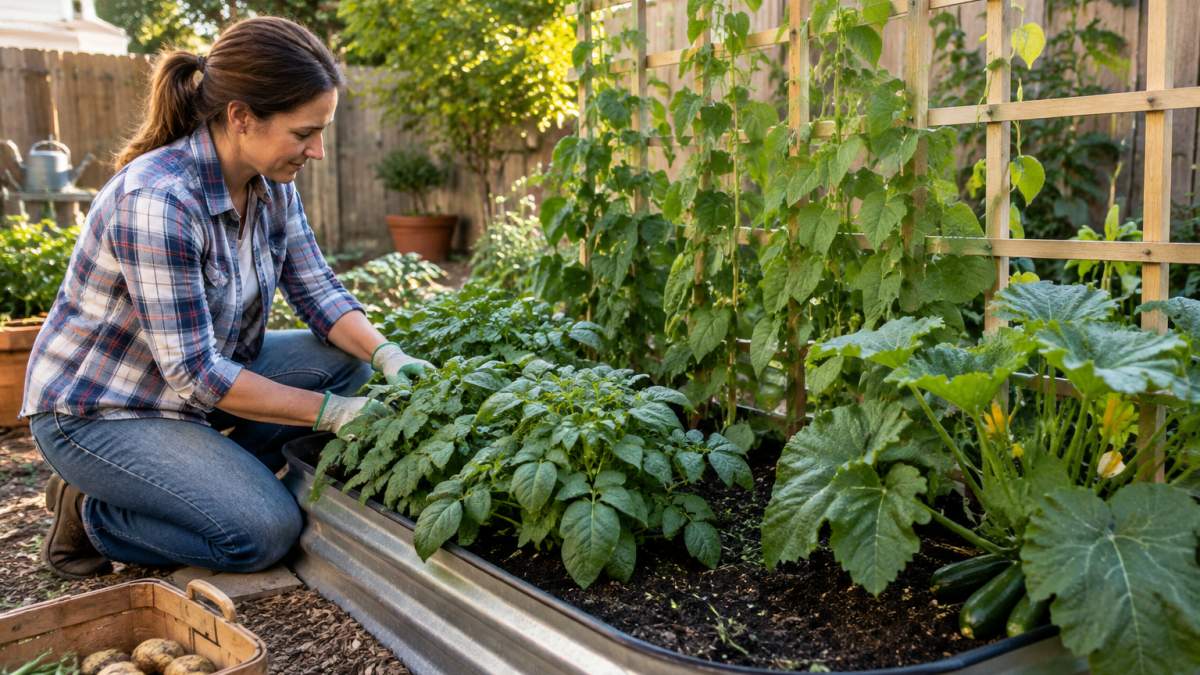
A survival garden layout for a small yard starts with sunlight, not seeds. Map where the sun lands through the day, then put your heaviest feeders in the brightest spots. Group tall crops so they don't shade short ones. Leave paths wide enough to harvest without trampling beds. Most calorie crops, potatoes, sweet potatoes, corn, squash, dry beans, need full sun, and more sun generally means better yields.
A Quantified 120-Square-Foot Planting Plan
The plan below fits a typical small backyard: three 4 ft by 10 ft beds (120 square feet of growing space) plus 3 ft paths between them. It assumes full sun, a growing season of at least 120 days, and average soil improved with compost.
| Bed | Crop | Space allocated | Expected harvest | Approx. calories |
|---|---|---|---|---|
| Bed 1 | Potatoes (two plantings, early and mid-season) | 40 sq ft | 50-70 lb | 17,500-24,500 |
| Bed 2 (front half) | Dry bush beans | 20 sq ft | 3-5 lb dry | 4,500-7,500 |
| Bed 2 (back half) | Sweet potatoes or winter squash | 20 sq ft | 20-30 lb squash or 16-24 lb sweet potatoes | 3,600-7,000 |
| Bed 3 (trellised edge) | Pole beans and cucumbers on a trellis | 10 sq ft of ground | 8-12 lb beans | 1,200-1,800 |
| Bed 3 (center) | Beets and carrots | 20 sq ft | 16-24 lb | 3,200-4,800 |
| Bed 3 (edges) | Kale, chard, herbs | 10 sq ft | 4-6 lb greens | 600-900 |
Total expected output is roughly 30,000-46,000 calories from 120 square feet in a good year. For a two-adult household, that is a substantial storage-crop reserve, several months of starch and protein sides, plus fresh greens and beans through the season.
Layout Rules That Protect the Harvest
- Put the tallest crops on the north side (in the Northern Hemisphere) so they don't shade shorter beds to their south.
- Run trellises along bed edges or paths, not through the middle of a bed, so you can reach both sides.
- Keep paths 2-3 ft wide. Narrower paths save space but make harvesting and hilling potatoes awkward.
- Group heavy feeders together, potatoes, corn, squash, and rotate them to a different bed the following year to reduce pest and disease buildup.
- Reserve one sunny edge for pollinators and herbs such as basil, dill, and borage; they earn their space by supporting bean and squash set.
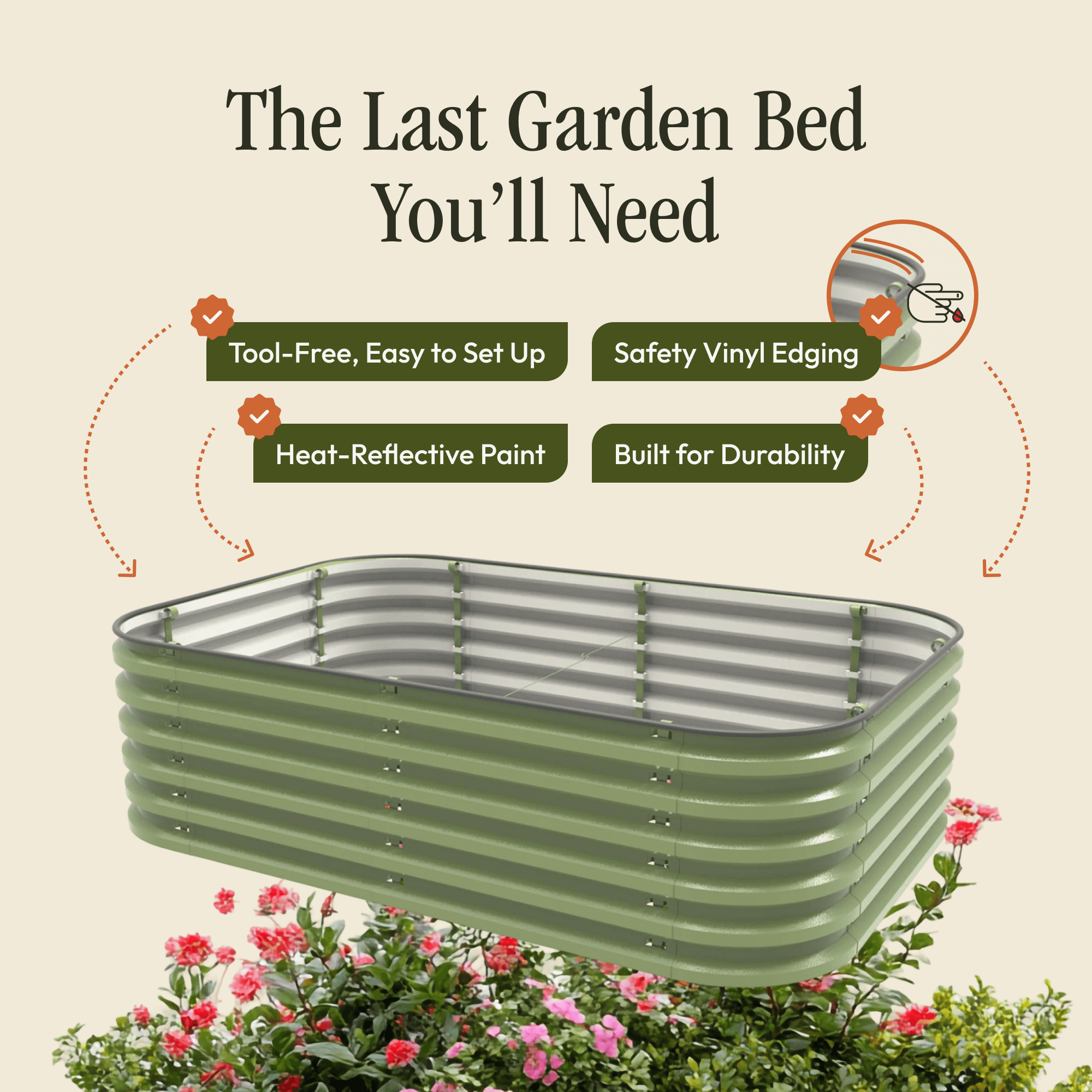
A raised bed kit can make this easier. The Gro-Rite raised garden bed kit assembles without tools and stands at a comfortable 17" working height, reducing bending while you plant and harvest.
Vertical and Intensive-Space Techniques
Vertical growing multiplies your harvest without adding ground. Trellis beans and peas upward. For a deeper look at these methods, see our guide on growing food in small spaces.
Watch out: sprawling winter squash and sweet potato vines will climb over paths and smother neighboring beds if you don't direct them. Train runners along the bed edge or up a low trellis, and prune tips if they invade paths.
Step-by-Step: Planting, Growing, and Storing Your Calorie Crops
Here is how to grow calorie dense crops from seed to storage:
- Prepare the soil. Loosen it deep and work in organic fertilizer.
- Plant at the right depth. Follow the seed packet for each crop.
- Water consistently. Deep watering beats light daily sprinkling.
- Feed and hill. Side-dress heavy feeders and hill potatoes as stems rise.
- Harvest at maturity. Cure roots and squash before storage.
- Store cool and dry. Keep crops dark, dry, and ventilated.
Curing is a step beginners often skip. Winter squash and sweet potatoes need a warm, dry period to harden their skins before storage. Skip it and they spoil fast. Our Seed Growing Guide walks through planting, harvest, and seed saving for every variety.
Choosing Seeds for Your Calorie Garden
Choosing seeds for your calorie garden comes down to three things: organic, non-GMO, and heirloom. Heirloom varieties let you save seed and regrow your harvest year after year. That is the whole point of self-sufficiency.
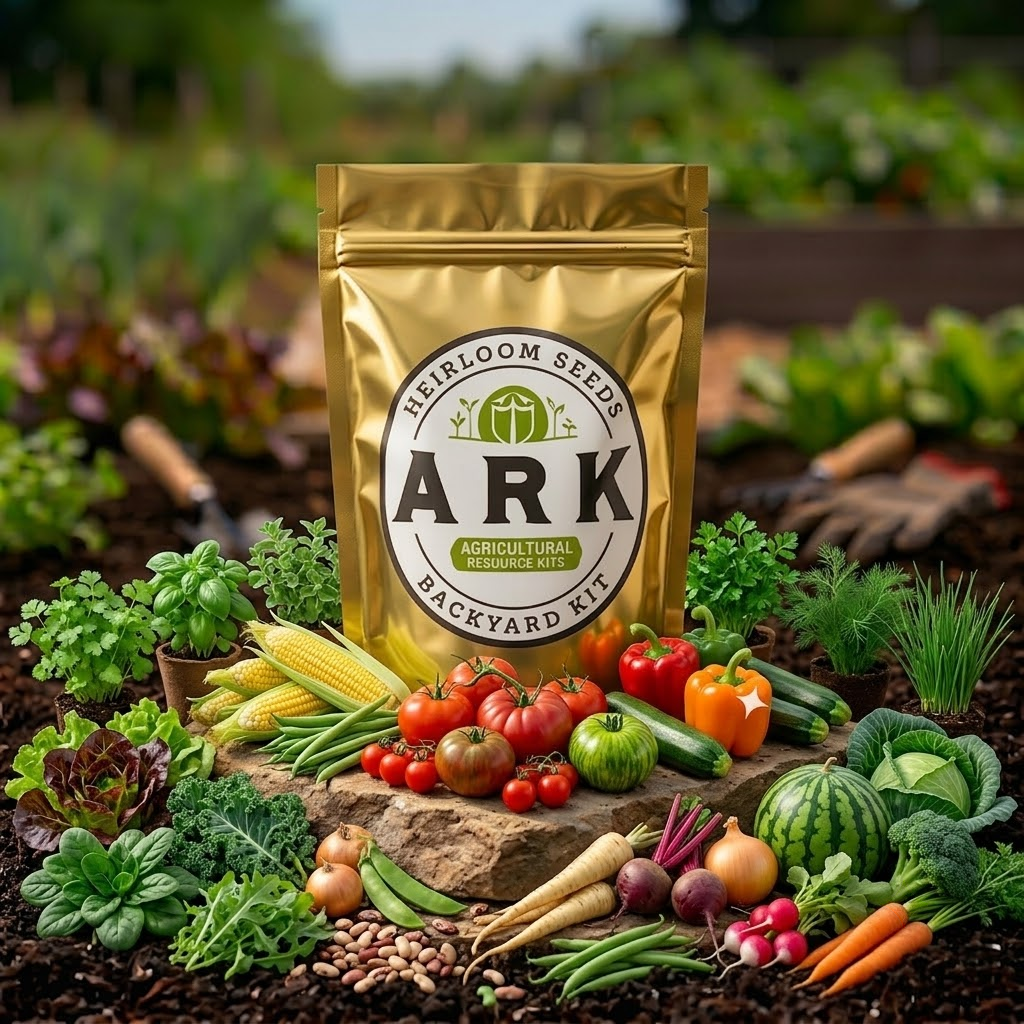
Our Backyard Seed Kit packs over 20,000 organically grown heirloom seeds, including dry beans, sweet corn, butternut squash, and root crops, labeled and sealed separately in self-sealed containers designed for long-term storage.
Small-space food growing rewards planning over space. Pick dense, storable crops, plant them tightly, and cure your harvest well.
Frequently Asked Questions
What is the most efficient crop for calories in a small garden?
Potatoes are usually the top pick. They return roughly 1,500 to 2,000 calories per 10 square feet in a decent growing season, and they store for months without processing. Sweet potatoes, dry beans, and winter squash follow close behind. Salad greens and tomatoes are worth growing for nutrition and flavor, but they deliver far fewer calories per square foot, so treat them as add-ons rather than the base of your calorie dense crops plan.
Can you grow calorie dense crops in containers?
Yes. Potatoes grow well in 10 to 15 gallon containers or grow bags, and bush beans, kale, and determinate tomatoes work in smaller pots. The limit is root depth and soil volume, so choose compact varieties and keep containers in full sun. A patio with six to eight large containers can produce a meaningful share of a household's starch and protein if you water consistently and refresh the soil each season.
How much garden space do you need to grow staple crops?
A 200 to 400 square foot bed is enough to grow a serious supply of potatoes, beans, and squash for one or two people, especially if you use succession planting and vertical trellises. A single 3.5 by 5 foot raised bed can hold a season of potatoes or a block of dry beans. Start with the space you have, measure what it yields, and expand the following year based on real results.
Which high-yield crops for small spaces are easiest for beginners?
Potatoes, bush beans, and zucchini are the most forgiving. Potatoes tolerate imperfect soil, beans fix their own nitrogen, and zucchini produces heavily with almost no attention. Winter squash is also simple but needs room to sprawl. Skip corn in a small yard unless you have a dedicated block, since it needs wind pollination and yields less per square foot than roots and legumes.


