


How to Grow Vegetables in Apartments: A Complete Guide
08:00 AMTable of Contents
- Assess Your Space and Growing Conditions
- Best Vegetables for Container Gardening
- How to Grow Vegetables Without a Balcony
- Set Up Your Indoor Vegetable Garden
- Apartment Gardening for Beginners: Getting Started
- Managing Pests, Disease, and Pollination Indoors
- Harvesting and Saving Seeds for Next Season
- Frequently Asked Questions
Last Updated: October 9, 2026
Assess Your Space and Growing Conditions
Learning how to grow vegetables in apartments starts with understanding what you have to work with. Light, space, and airflow are the three factors that determine success or failure. Most apartment gardeners fail because they pick crops first and assess conditions second. Flip that order.
Measuring Available Sunlight
How much direct sunlight hits your space? This is the single biggest constraint for apartment vegetable gardening.
Most vegetables need 6-8 hours of direct sunlight daily. Leafy greens tolerate 4-6 hours. If your windows face north, you're working with limited light. South-facing and west-facing windows are ideal. East-facing windows work if they get morning sun without afternoon heat stress.
Measure your light honestly. Stand in your growing spot at different times of day. Watch how shadows move. A spot that looks bright at noon might be shaded by 2 PM.
Understanding Supplemental Grow Lights
If natural light is limited, supplemental grow lights solve the problem. They're not optional for apartment growing in many climates, they're essential.
LED grow lights are affordable and efficient. They produce far less heat than older fluorescent options. A simple LED panel mounted above your containers can turn a dark corner into a productive growing area.
Position lights 6-12 inches above plants. Most vegetables need 12-16 hours of light daily under artificial lighting. Use a timer to automate this. The investment pays for itself in one season of fresh vegetables.
Best Vegetables for Container Gardening
Not all vegetables thrive in containers. Some need deep root systems. Others produce prolifically in small spaces. Choose crops that match your constraints.
Leafy Greens: Lettuce, Spinach, and Kale
Leafy greens are the easiest vegetables to grow in apartments. They're forgiving, fast, and productive in small spaces.
Lettuce grows in shallow containers, 6-8 inches deep is enough. Plant seeds directly or use seedlings. Harvest outer leaves as they mature, leaving the center to keep producing.
Spinach needs slightly deeper soil (8-10 inches) but tolerates cooler temperatures. It's ideal for fall and spring growing. In summer, heat causes it to bolt and turn bitter.
Kale is a heavyweight producer. One plant generates dozens of leaves over months. It tolerates lower light than lettuce.
All three grow well under grow lights. They don't need pollinators. They rarely face pest problems indoors.
Fruiting Crops: Tomatoes and Peppers
Tomatoes and peppers are more demanding but absolutely worth the effort. They need consistent light, warmth, and hand-pollination indoors.
Cherry tomatoes perform better in containers than large slicing varieties. They need 5-gallon containers minimum. Determinate varieties stay compact. Indeterminate varieties grow tall and need staking or caging.
Peppers are slower to mature but produce for months. They need warmth (65°F minimum at night). A single pepper plant yields 15-30 peppers over a season. They're less fussy about light than tomatoes but still need 6+ hours daily.
Hand-pollinate both crops by gently shaking flowers or using a small paintbrush to transfer pollen between blooms. Without pollinators, you get no fruit.
Herbs for Year-Round Flavor
Herbs are the easiest high-value crop for apartments. They grow fast, tolerate lower light, and produce continuously.
Basil loves warmth and light. It grows quickly from seed. Pinch off the top to encourage branching. One plant supplies a kitchen for months.
Cilantro is cold-tolerant and grows fast. It bolts quickly in heat, so grow it in cooler months. Dill works similarly. Both tolerate partial shade better than basil.
Parsley, chives, oregano, and thyme are perennial or long-lived. Plant once and harvest for a year or more. They're nearly impossible to kill.
How to Grow Vegetables Without a Balcony
Not every apartment has a balcony. Many have limited window space. This doesn't stop you from growing vegetables.
Windowsill and Shelf Growing
Windowsills are the most obvious growing spot, but shelves expand your options dramatically.
A sunny windowsill holds 3-4 small containers. Rotate crops as you harvest. Use the same space for spring lettuce, summer basil, and fall spinach.
Install shelves near a window and use grow lights above each shelf. A 2-foot by 2-foot shelf unit with three tiers and LED lights above each tier creates a micro-farm in a closet or corner.
Shelves also work on walls away from windows if you add grow lights. Many apartments have unused wall space. A vertical shelf system with lights turns dead space into productive growing area.
Vertical Growing Systems
Vertical gardening multiplies your growing space without expanding your footprint.
Wall-mounted planters stack containers vertically. Use them on balconies, patios, or even indoors near lights. A 4-foot tall vertical planter holds 12-16 plants in the space of a single large pot.
Hanging baskets work for trailing herbs and lightweight crops. Mount them from ceiling hooks or plant stands. They catch light and air circulation that ground-level plants miss.
Tiered plant stands create vertical gardens in minimal space. A simple 3-tier stand holds 9-12 containers in a 2-foot by 2-foot footprint.
Set Up Your Indoor Vegetable Garden
The right containers, soil, and watering system determine whether your apartment garden thrives or struggles.
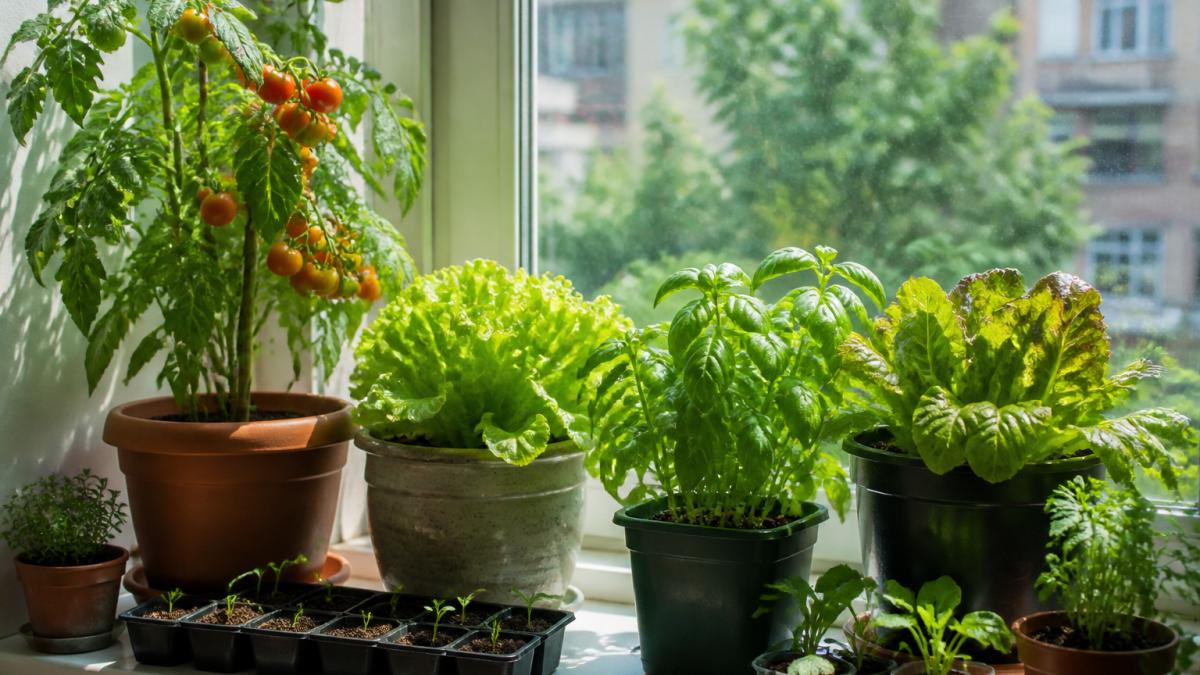
Selecting Containers and Planters
Container size matters. Too small and roots crowd. Too large and soil stays wet, causing root rot.
Use the depth rule: lettuce needs 6 inches, herbs need 8 inches, tomatoes and peppers need 12+ inches. Drainage holes are mandatory. Every container must drain.
Fabric pots work better than plastic for indoor growing. They breathe, preventing waterlogging. A 5-gallon fabric pot costs $2-4 and lasts years.
Group containers on trays or saucers to catch water and protect floors. Use a plant stand or shelving to elevate containers for better airflow underneath.
Choosing Potting Soil and Growing Media
Garden soil doesn't work indoors. It's too heavy, compacts easily, and harbors pests and disease.
Use potting mix designed for containers. It's lighter, drains better, and stays airy. Brands vary, but quality potting mixes contain peat moss or coconut coir, vermiculite, and perlite.
Coconut coir is a sustainable alternative to peat moss. It holds moisture well and drains adequately. Vermiculite retains water. Perlite improves drainage.
For long-term storage and sustainability, consider the ARK Seed Kits approach: invest in quality seeds now, grow them successfully, and save seeds from your harvest to regrow next season.
Mix your own potting soil if you prefer. Combine equal parts coconut coir, vermiculite, and perlite. Add compost for nutrients.
Drainage and Watering Systems
Overwatering kills more apartment vegetable gardens than any other mistake.
Check soil moisture before watering. Stick your finger 1 inch into soil. If it feels wet, wait. If it feels dry, water. Most containers need water every 2-3 days, but this varies by container size, soil type, and light intensity.
Water until it drains from the bottom. This flushes salts and ensures even moisture. Empty saucers after 30 minutes so roots don't sit in standing water.
Self-watering containers have built-in reservoirs. They're helpful if you travel or forget to water. Drip irrigation timers work for multiple containers. A simple battery-operated timer ($15-30) connects to a hose and drips water on a schedule.
Apartment Gardening for Beginners: Getting Started
New gardeners often overthink the process. Start simple. Master the basics. Scale up as you gain confidence.
Starting With Seeds or Seedlings
Seeds are cheaper but slower. Seedlings are faster but cost more.
For beginners, seedlings make sense. Buy 4-week-old seedlings from a nursery. They're past the fragile germination stage. Transplant them into containers with potting soil.
Seeds take 1-2 weeks to germinate and another 4-6 weeks to grow to transplant size. If you're starting your apartment vegetable garden in spring, seeds make sense.
Use seed trays with humidity domes for germination. Keep soil consistently moist but not waterlogged. Once seedlings emerge, remove the dome and place under grow lights.
The ARK Seed Kits Patio Seed Kit includes vegetables suited for small spaces: red cherry tomatoes, California bell peppers, Boston pickling cucumbers, lettuce, radishes, basil, and cilantro.
Watering and Basic Plant Care
Consistency beats perfection. Water on a schedule. Check daily. Adjust based on what you see.
Most apartment vegetables need water when the top inch of soil is dry. During growth, this is typically every 2-3 days.
Fertilize every 2-3 weeks with a balanced fertilizer (10-10-10 NPK). Container plants exhaust nutrients faster than garden soil. Without feeding, production drops after 4-6 weeks.
Remove dead leaves and flowers. Pinch off growing tips of herbs to encourage branching. These simple practices improve air circulation and prevent disease.
Monitor for pests weekly. Indoor gardens rarely face serious pest pressure, but spider mites and whiteflies can appear. Spray affected plants with insecticidal soap if needed.
Managing Pests, Disease, and Pollination Indoors
Indoor growing eliminates most pest and disease pressure. But some problems still occur.
Spider mites thrive in dry, warm conditions. They appear as tiny dots on leaves and fine webbing. Increase humidity by misting plants or running a humidifier.
Whiteflies are tiny white insects on leaf undersides. They cause yellowing and stickiness. Use yellow sticky traps to monitor and control populations.
Powdery mildew appears as white powder on leaves in humid, stagnant air. Improve airflow with a small fan. Remove affected leaves. Spray with sulfur if needed.
Pollination is the main challenge for fruiting crops indoors. Bees don't visit indoor plants. Hand-pollinate by gently shaking flowers or using a small paintbrush to move pollen between blooms.
Harvesting and Saving Seeds for Next Season
Harvest regularly to encourage more production. Most vegetables produce more when you pick consistently.
Leafy greens: Pick outer leaves when they're 3-4 inches long. Leave the center to keep growing. Harvest continuously for 6-8 weeks.
Herbs: Pinch off growing tips and upper leaves. Never remove more than one-third of the plant at once.
Tomatoes and peppers: Pick when fully colored. They'll ripen off the vine if needed. One plant produces continuously for 3-4 months.
Saving seeds extends your investment. Let a few plants flower and produce mature seeds.
The ARK Seed Kits approach emphasizes seed saving for long-term sustainability.
Growing vegetables in apartments works. It requires light, the right containers, consistent watering, and realistic crop choices.
Frequently Asked Questions
What is the easiest vegetable to grow in an apartment?
Leafy greens like lettuce, spinach, and kale are the easiest vegetables to grow in apartments. They tolerate lower light levels, grow quickly (30-60 days), and thrive in shallow containers. Herbs like basil and cilantro are equally beginner-friendly. The ARK Herb Seed Kit provides seven essential herbs suited to apartment growing, giving you fresh flavors with minimal experience required.
Can I grow vegetables in an apartment without a balcony?
Yes. Windowsills, shelves, and vertical growing systems work well for apartment vegetables without outdoor space. South-facing windows provide the most sunlight, but supplemental grow lights allow you to garden anywhere indoors. Leafy greens, herbs, and compact peppers adapt well to indoor-only setups. Vertical trellises maximize your growing area by using wall space and hanging pots.
How much sunlight do apartment vegetables need?
Most vegetables need 6-8 hours of direct sunlight daily. Leafy greens tolerate 3-4 hours. Measure light at your window using a light meter app or by observing shadows throughout the day. If natural light falls short, supplemental LED grow lights bridge the gap and cost $30-100. Position lights 6-12 inches above seedlings and adjust as plants grow to prevent stretching.
How often should I water vegetables grown in containers?
Check soil moisture daily by inserting your finger 1 inch deep. Water when the top inch feels dry, typically every 2-3 days depending on humidity, temperature, and pot size. Container vegetables dry out faster than ground gardens. Ensure drainage holes prevent root rot. In winter, reduce frequency as growth slows. Consistent moisture is critical for fruiting crops like tomatoes and peppers.


