


High Yield Heirloom Vegetable Seeds: 6 Best Kits for 2026
08:00 AMTable of Contents
- High Yield Heirloom Vegetable Seeds: A Quick Comparison
- All-In-One Seed Kit: Maximum Variety for Long-Term Food Security
- Backyard Seed Kit: Easy Heirloom Vegetables to Grow for Beginners
- Prepper Special: Five All-In-One Kits at Bulk Savings
- Salsa Seed Kit: Heirloom Vegetables That Produce All Season
- Herb and Patio Kits: High-Yield Vegetables for Home Gardens and Small Spaces
- How to Save Heirloom Vegetable Seeds for Year-After-Year Harvests
- Choosing the Right High Yield Heirloom Vegetable Seeds for Your Growing Conditions
- Frequently Asked Questions
Last Updated: October 13, 2026
High Yield Heirloom Vegetable Seeds: A Quick Comparison
Growing your own food starts with the right seeds. High yield heirloom vegetable seeds deliver reliable harvests year after year, and unlike hybrid varieties, they reproduce true to type, meaning you can save seeds from this year's crop and plant them again next season.
The challenge most gardeners face isn't finding heirloom seeds. It's finding ones that actually perform well in their climate, produce enough to justify the garden space, and come with clear guidance on saving seeds for future years. Generic seed packets often lack this specificity. That's where focused seed kits make the difference.
Below, we've compared six kits that deliver measurable results for different growing situations. Whether you're planning for long-term food security, starting your first garden, or maximizing yield in limited space, one of these will fit your needs.
| Kit | Price | Total Seeds | Best For | Key Advantage |
|---|---|---|---|---|
| All-In-One Seed Kit | $249.00 | 50,000 | Complete food security | Maximum variety and yield per plant |
| Backyard Seed Kit | $99.00 | 20,000+ | Beginners with space | Balanced selection, manageable quantity |
| Prepper Special | $996.00 | 250,000 | Bulk storage and sharing | 5 kits at 20% savings |
| Salsa Seed Kit | $29.99 | 1,000 | Specialty harvests | High-yield salsa ingredients year-round |
| Herb Seed Kit | $29.99 | 6,000+ | Culinary and medicinal use | Multiple harvests per season |
| Patio Seed Kit | $29.99 | 2,000 | Small spaces and containers | Compact productivity |
All-In-One Seed Kit: Maximum Variety for Long-Term Food Security
The All-In-One Seed Kit is the foundation for serious gardeners and preppers building food independence. With 50,000 seeds across 16 herb varieties and dozens of vegetable types, this kit delivers the genetic diversity needed for year-round harvests and long-term resilience.


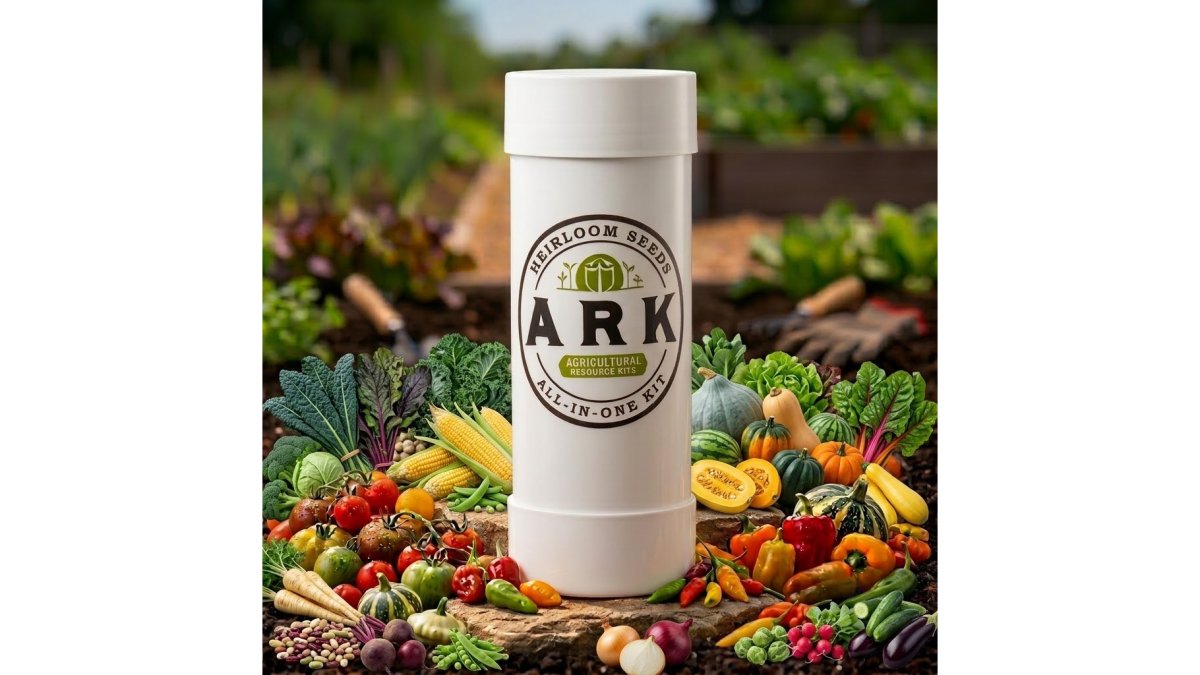
What makes this kit stand out is the seed count per variety. You're getting 1,000 dry bean seeds, 2,500 carrots, 4,000 lettuce seeds, and 3,000 turnips, quantities that support succession planting throughout the season and leave enough for seed saving.
The included Seed Growing Guide teaches you not just how to grow each variety, but how to identify which plants to select for seed saving. This transforms the kit from a one-time purchase into a self-perpetuating system.
The kit is packaged in indestructible PVC tubing designed for 15+ year shelf life. Each seed type is labeled and sealed separately, so you can use what you need and keep the rest protected. At $249.00, this represents roughly $0.005 per seed, far less than buying individual packets from garden centers, and the variety is unmatched.
Backyard Seed Kit: Easy Heirloom Vegetables to Grow for Beginners
Starting small doesn't mean settling for limited variety. The Backyard Seed Kit includes 20,000+ seeds across 20+ vegetable and herb types, scaled down to quantities that feel manageable for someone with a typical suburban garden or raised beds.
This kit drops the seed count to practical levels: 200 dry beans, 500 radishes, 1,000 carrots, 1,000 lettuce seeds across two varieties, and 100 seeds each for tomatoes and peppers. You're getting enough to plant multiple successions without feeling overwhelmed by seed surplus. The selection covers the core vegetables that produce reliably and deliver noticeable harvests: beans, corn, peas, squash, cucumbers, leafy greens, and root crops.
The Backyard Kit does not include the Seed Growing Guide by default, but you can add it for $10. For beginners, this guide is worth the investment, it removes guesswork about spacing, days to maturity, and when to harvest for seed saving.
At $99.00, this kit costs roughly $0.005 per seed and delivers immediate value. You'll have leftovers after your first season, which means year two costs you nothing if you replant the same varieties. The sealed containers preserve germination for multiple years, so there's no waste if you decide to skip a season.
Prepper Special: Five All-In-One Kits at Bulk Savings
The Prepper Special is simple math: five All-In-One kits for $996.00 instead of $1,245.00. That's a 20% savings for anyone building a larger seed bank or planning to share kits with family or community members.

This option makes sense if you're serious about food security across multiple growing seasons or want to distribute seeds among several households. Each kit comes with the Seed Growing Guide, so you're getting five complete systems, not just five seed collections. You end up with 250,000 total seeds, enough to grow a substantial garden for years and maintain seed diversity even if some varieties underperform in your climate.
The real value here isn't just the discount. It's having redundancy. If one kit's beans don't germinate well, you have four more to work with. If one household's tomatoes fail, another can share their harvest and seeds. Preppers understand that diversity and backup systems are insurance.
Salsa Seed Kit: Heirloom Vegetables That Produce All Season
Not every gardener wants 50,000 seeds. The Salsa Seed Kit delivers 1,000 seeds focused entirely on the five ingredients that matter for fresh salsa: tomatoes, onions, peppers, and cilantro.
This kit includes Red Cherry and Beefsteak tomatoes for different harvest windows, Yellow Spanish onions, Jalapeño and Cayenne peppers for heat options, California Bell peppers for mild versions, and cilantro. The quantities are generous, enough to plant multiple successions of cilantro (which bolts quickly) and ensure continuous harvests throughout the growing season.
What makes this kit practical is focus. You're not managing 16 herb varieties and 20 vegetable types. You're optimizing for one goal: homegrown salsa ingredients. This reduces decision fatigue and lets you concentrate on mastering the growing conditions these five plants actually need.
At $29.99, this is the entry point for specialty gardening. It's also ideal for apartment dwellers with balcony or patio space, tomatoes, peppers, and onions thrive in containers, and cilantro grows aggressively in pots. Even with limited sunlight, you'll harvest enough for weekly salsa batches.
Herb and Patio Kits: High-Yield Vegetables for Home Gardens and Small Spaces
The Herb Seed Kit and Patio Seed Kit address the same reality: not everyone has room for a traditional garden bed. Both are designed for container gardening, windowsills, and small outdoor spaces where vertical or compact growing is the strategy.
The Herb Kit delivers 6,000+ seeds across seven essential culinary and medicinal herbs: cilantro, basil, dill, oregano, parsley, chives, and thyme. Herbs produce prolifically in containers. A single basil plant in a 5-gallon pot yields enough leaves for multiple meals per week throughout the season.
The Patio Kit includes 2,000 seeds focused on vegetables that perform well in containers: Red Cherry tomatoes, California Bell peppers, Boston Pickling cucumbers, Berry Belle radishes, Salad Bowl lettuce, basil, and cilantro. These varieties were selected for compact growth and reliable production in limited space.
Both kits cost $29.99 and are ideal for beginners testing whether they actually enjoy gardening before investing in larger beds or equipment. They're also perfect for renters who can't modify their yard.
How to Save Heirloom Vegetable Seeds for Year-After-Year Harvests
The defining feature of heirloom seeds is that they reproduce true to type. This means seeds saved from your harvest will grow plants identical to their parents.
Saving seeds starts with selecting the right plants. Choose the healthiest, most productive plants in your garden, not the first ones to mature, but the ones that demonstrate vigor and good yield.
Let seeds mature fully on the plant. For tomatoes, wait until fruit is overripe and starting to soften. For beans and peas, leave pods on the plant until they're brown and dry.
Clean and dry seeds thoroughly before storage. Remove all plant material and moisture. Spread seeds on paper plates in a warm, dry location with good air circulation.
Store seeds in cool, dry conditions. The Seed Growing Guide included with ARK Seed Kits outlines the specific requirements for each variety. Generally, temperatures between 32-41°F and humidity below 50% preserve viability for years.
Choosing the Right High Yield Heirloom Vegetable Seeds for Your Growing Conditions
Not all heirloom vegetables perform equally in every climate. Days to maturity, cold tolerance, and heat sensitivity vary significantly by variety.
Start by identifying your frost dates. The number of frost-free days between your last spring frost and first fall frost determines which varieties will mature before cold weather arrives.
Heirloom vegetables also vary in their heat and cold tolerance. Some peppers and tomatoes need consistent warmth above 70°F to set fruit. Others, like many bean varieties and root crops, actually produce better in cooler conditions.
Yield per square foot matters when space is limited. Vertical growers like pole beans and indeterminate tomatoes produce more food per square foot than sprawling varieties.
The All-In-One and Backyard kits include multiple varieties of key crops, different tomato types, bean varieties, and squash types, specifically to give you options. Plant one variety and observe how it performs in your conditions.
Frequently Asked Questions
What are the highest-yielding heirloom vegetables I can grow?
Beans, peas, tomatoes, squash, and leafy greens like kale and spinach consistently deliver high yields in home gardens. Heirloom varieties such as Sugar Baby watermelon, Butternut squash, and beefsteak tomatoes produce abundant harvests when given proper spacing, consistent watering, and adequate sunlight. Succession planting (sowing seeds every 2-3 weeks) extends your harvest window and maximizes total yield per square foot throughout the growing season.
Are heirloom seeds as productive as hybrid seeds?
High-yield heirloom seeds perform comparably to hybrids when matched to appropriate growing conditions. The key difference: hybrids are bred for uniformity and shelf life, while heirloom varieties prioritize flavor, adaptability, and seed-saving ability. Many gardeners report that heirloom tomatoes, beans, and peppers actually outproduce hybrids in established gardens because they're better adapted to local climate and soil. Germination rates for quality heirloom seeds stored properly remain high for years.
How do I know if heirloom seeds are actually non-GMO and organic?
Reputable seed suppliers clearly state certification on their packaging. ARK Seed Kits labels all products as 100% organic and non-GMO. Open-pollinated heirloom seeds by definition cannot be genetically modified; they reproduce true-to-type when saved. Look for suppliers who source from certified organic growers and store seeds in conditions that preserve germination quality. Seed packets should list the variety name, days to maturity, and growing requirements, transparency signals quality.
Can I really save seeds from heirloom vegetables year after year?
Yes, heirloom and open-pollinated varieties reproduce after their own kind, making seed saving straightforward. Let mature plants flower, collect dry seed pods, store seeds in a cool, dry place, and replant the following season. ARK Seed Kits include a growing guide that teaches seed-saving techniques for each variety. Properly stored heirloom seeds remain viable for years, making them ideal for long-term food security and reducing your reliance on purchasing new seeds annually.
Which heirloom vegetables work best for container gardening and small spaces?
Tomatoes, peppers, lettuce, radishes, beans, and herbs thrive in containers and raised beds. Compact varieties like cherry tomatoes and bush beans maximize yield in limited space. The Patio Seed Kit includes varieties specifically chosen for containers and balconies, delivering fresh vegetables even without a traditional garden. Focus on succession planting and consistent watering to maintain productivity in containers, where soil nutrients deplete faster than in-ground gardens.
Growing reliable, productive food starts with seeds adapted to your climate and your space. High yield heirloom vegetable seeds from ARK Seed Kits give you that foundation, with 100% organic, non-GMO varieties that reproduce true to type, grow guides that teach seed saving, and packaging designed for 15+ year storage. Whether you're building long-term food security or starting your first garden, shop ARK Seed Kits now and take control of your food supply.


