


Garden Pulse vs Heaven's Harvest Seeds: Which Kit Wins?
08:00 AMTable of Contents
- Garden Pulse vs Heaven's Harvest Seeds: Quick Comparison
- How Long Do Survival Seeds Stay Viable
- Seed Variety and Nutritional Value for Emergency Gardens
- How to Store Seeds for Long-Term Storage
- Best Heirloom Seeds for Emergency Preparedness
- What Seeds to Stockpile for Survival
- Price Per Seed and Long-Term Value
- Packaging, Shipping, and Customer Support
- Frequently Asked Questions
Last Updated: October 17, 2026
Garden Pulse vs Heaven's Harvest Seeds: Quick Comparison
When building a survival seed collection, you're choosing between two approaches: generic variety or curated depth. Garden pulse vs heavens harvest seeds represent fundamentally different philosophies. One prioritizes breadth across many crop types; the other focuses on proven performers with deep seed counts per variety.
The decision comes down to three factors: how many seeds you need per crop, what your growing conditions support, and whether you want seed-saving guidance.
Here's the core difference: Garden Pulse emphasizes variety selection across multiple vegetable types. Heaven's Harvest emphasizes seed quantity and storage longevity. Neither is universally "better", but one will serve your specific goals more effectively.
| Feature | Garden Pulse | Heaven's Harvest | ARK Seed Kits |
|---|---|---|---|
| Total seed count | Moderate variety | High quantity focus | 50,000+ seeds (All-In-One) |
| Heirloom/open-pollinated | Yes | Yes | 100% organic heirloom |
| Storage packaging | Standard packets | Mylar/oxygen absorbers | Indestructible PVC tubing |
| Shelf life claim | 5-7 years | 10+ years | 15+ years |
| Seed saving guide included | Limited | Minimal | Comprehensive seed guide |
| Price entry point | Mid-range | Budget-friendly | $99-$249 |
| Best for | Variety seekers | Budget-conscious preppers | Serious long-term storage |
Numbers alone don't tell the full story. Your choice depends on what you're preparing for and how you plan to use the seeds.

How Long Do Survival Seeds Stay Viable
Seed viability is the single most important question for emergency preparedness. A seed that won't germinate is worthless when you need it. The answer depends on storage conditions, seed type, and how the seeds were packaged from the start.
Most vegetable seeds remain viable 3-5 years under normal household conditions. Beans, peas, and root crops last longer; onions, peppers, and herbs decline faster. But these timelines assume room-temperature paper packets, not proper survival storage.
Sealed, moisture-proof containers with oxygen absorbers kept cool and dry extend viability dramatically, many seeds last 10-15 years or longer, with some gardeners reporting germination from 20+ year old seeds.
Viability isn't binary, germination rates decline gradually. A packet at 90% in year one might hit 70% in year five and 40% in year ten. That's why seed quantity matters: you plant more knowing some won't sprout.
Heaven's Harvest markets 10+ year viability. ARK Seed Kits' All-In-One kit claims 15+ years in its indestructible PVC tubing. Garden Pulse typically guarantees 5-7 years. These claims depend entirely on how you store them after purchase. Even premium packaging fails if seeds are kept in a warm kitchen or humid basement.
Seed Variety and Nutritional Value for Emergency Gardens
Not all seeds are equal for survival. You need crops that deliver calories, nutrition, and storage potential, not ornamental appeal, the vegetables you choose determine whether your garden sustains you or merely supplements your diet.
Calorie-dense crops should anchor your collection. Beans, corn, squash, and potatoes provide carbohydrates and protein. Leafy greens deliver micronutrients but won't sustain you alone. Root vegetables store well. Medicinal herbs address minor health issues when commercial medicine isn't available.
Garden Pulse emphasizes variety across these categories, multiple lettuce types, several bean varieties, a range of herbs, appealing to gardeners who want options. Heaven's Harvest leans toward high-yield, proven performers: fewer varieties, more seeds of each.
ARK Seed Kits' All-In-One collection includes 1,000 dry bean seeds across multiple varieties, 3,000 turnip seeds, 4,000 lettuce seeds, and 30,000 herb seeds across 16 culinary and medicinal varieties. This depth matters in year-round gardening.
For serious preppers, beans provide complete protein with grains, squash stores for months without refrigeration, and kale survives frost. If one crop fails, you need backups. Variety isn't luxury, it's insurance.
How to Store Seeds for Long-Term Storage
Storage conditions determine whether your collection stays viable or becomes expensive compost. Three factors control longevity: temperature, moisture, and light.
Cool temperatures slow seed degradation. Store seeds at 40°F or below, a basement, root cellar, or refrigerator works (Storage Conditions : USDA ARS). Room-temperature storage (70°F) cuts viability in half compared to cool storage.
Moisture is the second enemy, seeds absorb water from humid air, triggering germination or rot. Oxygen accelerates degradation too, which is why emergency kits use sealed packaging with oxygen absorbers (Oxygen absorbers in food preservation: a review).
Light exposure degrades seed quality over time. Store seeds in opaque containers. Clear plastic packets on a sunny shelf lose viability faster than seeds in dark storage.
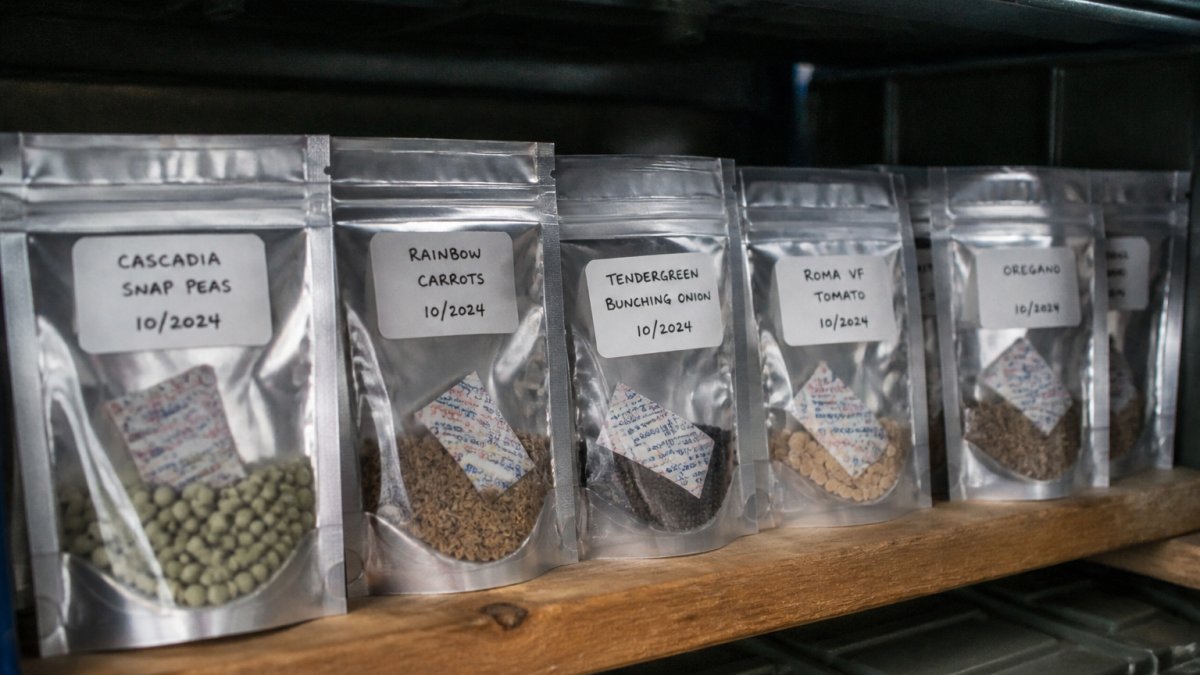
The practical approach: buy seeds packaged for long-term storage, not loose paper packets. If repackaging, use airtight containers with a silica gel desiccant.
Many preppers store seeds in multiple locations, one kit in the house, another buried in a waterproof container, a third at a trusted family member's home, protecting against fire, flood, or theft.
Best Heirloom Seeds for Emergency Preparedness
Heirloom seeds are non-hybrid, open-pollinated varieties whose seeds you can save and replant (Hybrid Seeds in History and Historiography).
The best heirloom varieties share traits: reliable germination, proven performance across climates, high nutritional value, and the ability to produce next year's seed.
Beans top the list. Dry beans like pintos, kidneys, and blacks are calorie-dense, store for years dried, and produce abundantly.
Squash and pumpkins deliver calories and store for months without processing. 'Butternut', 'Hubbard', and 'Acorn' are reliable heirlooms.
Tomatoes provide vitamins and can be dried or canned. Heirloom varieties like 'Brandywine' and 'Cherokee Purple' produce larger fruits than modern hybrids but need more space.
Root crops, carrots, beets, turnips, parsnips, store in sand or cool conditions for months.
Leafy greens like kale and spinach tolerate cool weather and produce repeatedly. 'Lacinato' kale survives frost. 'Bloomsdale' spinach germinates in cool soil.
ARK Seed Kits' All-In-One collection includes proven heirloom varieties across all these categories. The kit contains multiple tomato varieties, winter squash types, bean selections, and cold-hardy greens.
Garden Pulse includes heirloom options but with less depth per variety. Heaven's Harvest emphasizes quantity of common types.
What Seeds to Stockpile for Survival
Building a survival seed collection requires strategy. Space and time are limited, so you need seeds that deliver maximum nutrition and calories with minimum complexity.
Start with calorie crops: beans, corn, and squash. These three alone could sustain you if grown successfully. Beans provide protein. Corn provides carbohydrates and calories. Squash stores and provides nutrients.
Add root vegetables: carrots, beets, turnips, onions. They store without special processing, provide consistent winter nutrition, and tolerate poor soil and imperfect conditions.
Include cold-hardy greens: kale, spinach, chard. They extend your growing season, provide micronutrients that prevent deficiency diseases, and produce harvestable leaves within weeks.
Add pepper varieties for both fresh eating and preservation. Hot peppers can be dried and stored indefinitely. Bell peppers provide vitamin C.
Include culinary and medicinal herbs. Basil, oregano, parsley, cilantro, dill serve both kitchen and first-aid purposes. Medicinal herbs like echinacea, goldenseal, and chamomile address common ailments when pharmacy access is limited.
The ARK Seed Kits All-In-One includes all these categories in quantity. The Backyard Seed Kit provides a solid starter collection for someone building their first emergency garden. The Prepper Special offers five complete kits at bulk pricing, useful if you're building redundancy or sharing with family members.

Garden Pulse and Heaven's Harvest both include similar crop types, but with different seed counts per variety.
Price Per Seed and Long-Term Value
Comparing kits by total price obscures the real metric: price per seed. A $99 kit with 20,000 seeds and a $249 kit with 50,000 seeds both cost about half a cent per seed.
ARK Seed Kits' Backyard Kit costs $99 for 20,000 seeds. That's roughly $0.005 per seed.
Garden Pulse typically prices between $79-$149 depending on the kit size. Heaven's Harvest often undercuts at $59-$99 for similar seed counts. But lower price per seed doesn't always mean better value.
Consider what you're actually buying:
- Packaging quality (affects storage life)
- Seed quantity per variety (affects planting options)
- Inclusion of growing guides (affects success rates)
- Heirloom verification (affects seed-saving viability)
A $59 kit with poor packaging might lose 50% viability in 5 years. A $99 kit with superior packaging maintains 90% viability at 10 years.
ARK Seed Kits includes a comprehensive Seed Growing Guide ($15 value) with the All-In-One Kit. This guide teaches not just how to grow each crop, but how to save seeds for next year.
Heaven's Harvest emphasizes budget pricing but includes minimal guidance. Garden Pulse sits in the middle, moderate pricing with decent documentation.
For long-term value, calculate cost per viable seed at year five or ten, not year one.
Packaging, Shipping, and Customer Support
How seeds arrive and how the company handles problems matters more than most realize.
ARK Seed Kits ships in indestructible PVC tubing designed for long-term storage. The seeds arrive ready to store, no repackaging needed.
Heaven's Harvest typically uses mylar packets with oxygen absorbers. This is solid packaging, supporting their 10+ year viability claims.
Garden Pulse uses standard seed packet packaging, which is adequate for short-term storage but less ideal for 10+ year emergency scenarios. Standard packets allow slow moisture infiltration over years.
Customer support matters when seeds don't germinate or arrive damaged. ARK Seed Kits' customer reviews highlight responsive support and willingness to replace failed batches.
Heaven's Harvest offers budget pricing but with less detailed customer support infrastructure based on available reviews. Garden Pulse sits between, moderate support with decent responsiveness.
All three companies typically offer standard mail delivery, with ARK Seed Kits and Heaven's Harvest possibly offering expedited options.
For serious long-term food security, the choice between garden pulse vs heavens harvest seeds depends on your priorities. If you want maximum variety at budget pricing, Garden Pulse delivers.
But if you're building a survival seed collection for 10-15 year storage with the intention of saving seeds year after year, ARK Seed Kits' All-In-One Kit offers superior packaging (15+ year storage in indestructible PVC tubing), comprehensive seed-saving guidance, and proven heirloom varieties across all critical crop categories.
Frequently Asked Questions
How long do survival seeds stay viable in proper storage?
Survival seeds stored in cool, dry conditions can remain viable for 5 to 15+ years depending on the variety and storage method. Open-pollinated heirloom seeds generally maintain higher germination rates over longer periods than hybrid seeds. Proper storage in airtight containers, away from moisture and temperature fluctuations, is critical to extending shelf life. Most seed kits designed for emergency preparedness are packaged specifically to support long-term viability, with some manufacturers guaranteeing germination rates for over a decade.
What's the difference between heirloom and open-pollinated seeds?
Open-pollinated seeds are pollinated by insects, wind, or hand, producing offspring identical to the parent plant. Heirloom seeds are a subset of open-pollinated seeds that have been passed down through generations, typically at least 50 years old. Both types can be saved and replanted year after year, making them ideal for long-term self-sufficiency. Unlike hybrid seeds, which lose their traits in the next generation, heirloom and open-pollinated varieties breed true, allowing you to build a perpetual seed collection for future planting.
Which seeds should I prioritize for emergency food storage?
Focus on calorie-dense and nutrient-rich varieties: beans, corn, squash, and root vegetables like carrots and beets. These crops provide essential calories, protein, and nutrients while storing well and producing high yields in most growing zones. Add leafy greens like kale and spinach for vitamins, and include herbs for both culinary and medicinal use. A balanced survival seed collection includes a mix of fast-growing crops for immediate harvest and long-storage varieties like winter squash and dried beans that sustain you through off-seasons.
Can I save seeds from heirloom plants to regrow next season?
Yes, heirloom and open-pollinated seeds are specifically bred to allow seed saving. After harvest, let plants mature fully, collect dry seeds, and store them in cool, dry conditions for next season's planting. Seed saving reduces your long-term costs and builds a collection adapted to your local climate and soil. Most quality seed kits include growing guides that explain seed-saving techniques for each variety, making it easy to create a self-sustaining garden year after year.


