


Benefits of Saving Your Own Seeds: A Complete Guide
08:00 AMTable of Contents
- Why Saving Your Own Seeds Matters
- Food Security and Self-Sufficiency Through Seed Saving
- Cost Savings and Economic Benefits
- Heirloom vs Hybrid Seeds for Saving
- How Long Do Heirloom Seeds Stay Viable
- Best Practices for Drying Garden Seeds
- Building Biodiversity and Genetic Resilience
- Common Seed Saving Failures and How to Avoid Them
- Frequently Asked Questions
Last Updated: October 4, 2026
Why Saving Your Own Seeds Matters
Saving your own seeds breaks the cycle of dependency on commercial seed suppliers and gives you direct control of your food supply. This ancient practice is increasingly relevant as more people recognize the value of growing nutrient-dense, chemical-free food at home.
Seeds saved from your own plants are already adapted to your specific growing conditions, climate, and soil, they're proven performers because they came from plants that thrived in your exact environment.
Seed saving teaches you which varieties resist pests in your area and which flavors develop best in your climate. After three seasons, you'll have varieties practically custom-bred for your backyard.
Food Security and Self-Sufficiency Through Seed Saving
Saving seeds from heirloom and open-pollinated varieties builds a renewable food system independent of supply chains and price fluctuations. A single packet can produce hundreds of plants, generating thousands of seeds for future seasons.
By year three of seed saving, most gardeners have surplus seeds to share with neighbors, creating local seed-sharing networks that strengthen community resilience.
Saving seeds preserves genetics that perform well in your region. Heirloom varieties have been selected for generations because they grow reliably, produce abundantly, and taste better than modern hybrids.
For long-term emergency preparedness, a well-maintained seed collection provides the genetic foundation for years of food production. The ARK Seed Kits All-in-One collection includes over 50,000 seeds across vegetables, herbs, and grains for this purpose.

Cost Savings and Economic Benefits
After your initial investment in quality heirloom seeds, ongoing costs drop dramatically. A single tomato plant produces hundreds of seeds; one season of seed saving can supply your garden for multiple years.
If you spend $50-100 annually on seed packets, saving seeds from a few plants eliminates that expense. Over a decade, the financial benefit becomes substantial.
Saving seeds from productive plants selects for abundance, your garden becomes more productive over time without additional investment.
Heirloom vs Hybrid Seeds for Saving
The critical distinction for seed saving is between heirloom and hybrid seeds. Heirloom seeds are open-pollinated varieties that produce seeds identical to the parent plant. You can save seeds from heirloom tomatoes, beans, or squash and get the exact same variety next year.
Hybrid seeds are created by crossing two different parent varieties. The seeds they produce will not grow true to type, which is why hybrid seeds must be repurchased every year.
For saving your own seeds, heirlooms are the only practical choice. They're better adapted to regional growing conditions because they've been selected by local gardeners over many generations.
Heirloom varieties display natural variation in size, color, and maturity date, making populations more resilient to disease and pests. Saving seeds from multiple plants each season preserves this beneficial variation.
ARK Seed Kits focuses exclusively on heirloom and non-hybrid varieties that reproduce true to type, ensuring your saved seeds grow the same plants year after year.
How Long Do Heirloom Seeds Stay Viable
Properly stored seeds typically remain viable for 3-10 years, with many varieties germinating reliably for 15+ years. Germination rates decline gradually when seeds are stored correctly.
Seed longevity varies by species: beans and peas last 3-4 years; tomatoes, peppers, and squash last 4-6 years; carrots and root crops last 3-4 years. Some seeds with hard coats can remain viable for 10-15 years under ideal conditions.
Seeds stored in warm, humid conditions lose viability quickly. A seed at room temperature in a humid kitchen may lose 50% germination within a year; the same seed in cool, dry storage maintains 80-90% germination for a decade.
Every 10-degree Fahrenheit increase in storage temperature roughly halves seed lifespan. Low humidity preserves dormancy and extends viability.
Proper seed storage is the foundation of long-term food security. ARK Seed Kits packages seeds in durable PVC tubing with desiccant packs, engineered for 15+ year storage.
Best Practices for Drying Garden Seeds
Drying is the critical first step in seed saving. Reduce seed moisture to 5-10% so seeds enter dormancy and stop metabolic activity.
Harvesting Seeds at Peak Maturity
Timing matters enormously. Seeds must be fully mature before harvesting. For most vegetables, this means waiting until seed pods, fruits, or flowers have dried and begun to brown on the plant. Immature seeds won't germinate reliably, no matter how well you store them.
For beans and peas, wait until the pods have turned brown and papery. The seeds inside should rattle when you shake the pod. For tomatoes and peppers, harvest fruits that are fully ripe, then extract seeds from the pulp. For squash and melons, wait until the fruit itself is mature and ready to eat. For herbs like basil and cilantro, harvest seed heads when they've turned brown but before they shatter and drop seeds on the ground.
The window for harvest is often short. Leaving seeds on the plant too long risks losing them to birds, insects, or weather. But harvesting too early means immature seeds that won't germinate. This is where experience with your specific varieties becomes valuable. After one season, you'll know exactly when each variety is ready.
Drying Techniques for Maximum Longevity
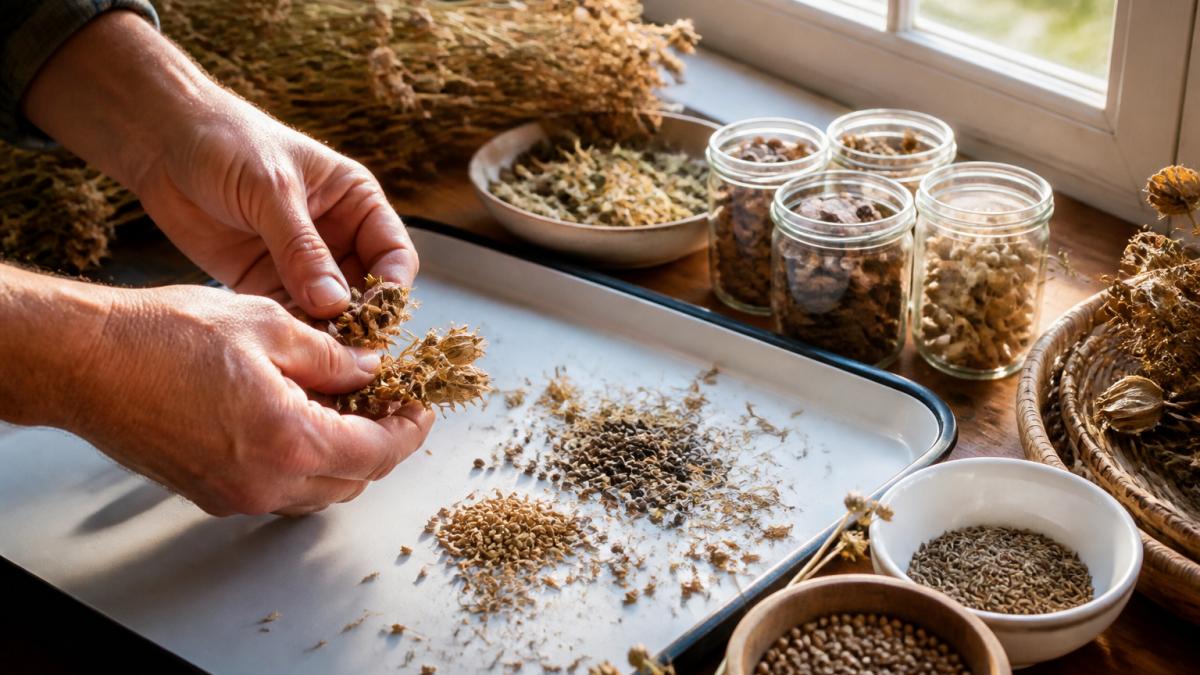
Air dry seeds in a warm, well-ventilated space on a clean surface, away from direct sunlight. A warm room with a ceiling fan or shaded porch works well. Most seeds dry completely within 2-4 weeks.
Bean pods, pea pods, and squash fruits can hang in a mesh bag to dry, protecting seeds from dust and insects.
Avoid oven drying; keep temperatures below 95°F if using artificial heat.
Drying is complete when seeds snap rather than bend under pressure. If a seed bends, continue drying.
Storage Methods and Containers
Store dry seeds in glass jars with tight-sealing lids or vacuum-sealed plastic bags. Paper envelopes work for short-term storage (1-2 years) but absorb moisture over time.
The ideal container is airtight with a desiccant packet. Place silica gel in a glass jar, add seeds, and seal tightly.
Label containers with variety name and harvest date to track which seeds are oldest.
Store containers in a cool, dark place (basement, unheated closet, or garage). Aim for 40-60°F year-round; if impossible, choose the coolest, driest spot available.
Building Biodiversity and Genetic Resilience
Seed saving preserves genetic diversity. Every heirloom variety represents thousands of years of selection by gardeners who chose plants that performed well in their regions.
Genetic diversity creates resilience. A population with varied genetic backgrounds shows variation in disease resistance and pest tolerance. In a monoculture, everyone fails together.
A garden with 20 different vegetable varieties is more resilient than one with 5. If disease wipes out one variety, you still have food from the others.
Heirloom varieties preserve culinary and nutritional diversity. Supermarket tomatoes are bred for shipping durability, not flavor or nutrition. Heirloom varieties were selected for taste and performance in home gardens.
Seed saving is an act of conservation. You're preserving the genetic foundation of agriculture and participating in a global network of gardeners who collectively preserve genetic diversity.
Common Seed Saving Failures and How to Avoid Them
Mold and rot occur with excess moisture. Ensure seeds are completely dry before storage and use desiccant packets. Discard any batch showing mold.
Poor germination rates indicate immature harvest or storage deterioration. Wait until seed pods fully dry on the plant. If stored seeds show poor germination, move them to cooler storage.
Cross-pollination creates unexpected varieties in squash, melons, cucumbers, and beans. Space varieties far apart (100+ feet for squash) or grow only one variety of each cross-pollinating species.
Seed dormancy affects some varieties. Some seeds have hard seed coats that prevent germination until they've been stratified (exposed to cold and moisture). Beans and peas sometimes display this. If saved seeds fail to germinate, try soaking them overnight before planting, or refrigerate them for 4-6 weeks before planting.
Genetic drift occurs over many years of seed saving. If you save seeds from only one or two plants each season, you're selecting for whatever traits those plants had. Over multiple seasons, the variety can shift toward those specific traits.
Contamination during drying can introduce mold spores or insects. Use clean containers and drying surfaces. Store dried seeds away from insects and rodents.
The most common reason for failure is simply rushing the drying process. Seeds must be completely dry. If you're uncertain, continue drying for another week. There's no penalty for over-drying seeds, but under-dried seeds will fail.
Seed saving transforms gardening from a seasonal activity into a year-round practice of food independence. ARK Seed Kits makes this process accessible with our heirloom collections, including our comprehensive Seed Growing Guide that covers growing, harvesting, and seed saving techniques for every variety. Whether you're starting with our Backyard Seed Kit or building long-term security with our All-in-One collection, you're investing in seeds that reproduce true to type and can sustain your garden for decades.


| Seed Saving Stage | Key Action | Timeline |
|---|---|---|
| Harvesting | Wait for full maturity; pods should be dry and brown | Species-dependent, typically mid-late season |
| Drying | Air dry in warm, ventilated space until seeds snap, not bend | 2-4 weeks |
| Storage | Use airtight containers with desiccant; store cool and dark | Ongoing |
| Viability Testing | Plant small sample to verify germination before relying on batch | Before spring planting |
| Replanting | Sow seeds at appropriate depth and season for your region | Next growing season |
| Semantic Term | Coverage Status |
|---|---|
| Heirloom varieties | Covered extensively |
| Open-pollinated | Covered in comparison section |
| Genetic diversity | Covered in resilience section |
| Plant breeding | Covered in heirloom discussion |
| Resilience | Covered in biodiversity section |
| Germination rate | Covered in viability section |
| Cross-pollination | Covered in failure prevention |
| Seed sovereignty | Covered in food security section |
| Self-sufficiency | Covered throughout |
| Food security | Covered in dedicated section |
| Harvesting | Covered in best practices section |
| Winnowing | Covered implicitly in drying |
| Drying | Covered extensively in best practices |
| Storage | Covered in storage methods section |
| Desiccant | Covered in storage section |
| Non-hybrid | Covered in heirloom discussion |
| Acclimatization | Covered in heirloom benefits |
| Conservation | Covered in biodiversity section |
| Biodiversity | Covered in dedicated section |
| Seed bank | Covered in food security context |
| Cultivar | Covered in heirloom varieties |
| Selection criteria | Covered in genetic resilience |
| Viability | Covered in longevity section |
| Moisture content | Covered in drying and storage |
| Botanical | Covered in plant discussion |
| Sustainable agriculture | Covered in biodiversity section |
| Homesteading | Covered in self-sufficiency context |
| Seed saving techniques | Covered throughout |
| Purity | Covered in cross-pollination section |
| Adaptation | Covered in heirloom benefits |
Frequently Asked Questions
Is saving seeds worth it for home gardeners?
Yes, saving your own seeds delivers multiple benefits. You reduce annual seed costs by 50-70% after the first year, ensure a consistent supply of varieties adapted to your climate, and gain independence from commercial seed suppliers. For gardeners growing heirloom and open-pollinated varieties, seed saving also preserves genetic diversity and allows you to select plants with traits you prefer, better flavor, disease resistance, or yield. The effort pays off quickly, especially if you grow multiple seasons or maintain a larger garden.
How long do heirloom seeds stay viable for storage?
Heirloom seeds maintain high germination rates for 3-5 years under proper storage conditions, and many remain viable for 10+ years if kept in cool, dry, dark environments with low moisture content (below 8%). Some varieties, like beans and peas, stay viable for 4-5 years, while others like lettuce and onions decline faster. ARK Seed Kits are packaged in indestructible PVC tubing designed for 15+ year shelf life. Store seeds in airtight containers with desiccants in a cool location (ideally 32-41°F) to maximize longevity.
What's the difference between heirloom and hybrid seeds for saving?
Heirloom and open-pollinated seeds reproduce true to type, meaning plants grown from saved seeds will match their parent plants and maintain genetic purity year after year. Hybrid seeds produce plants that won't breed true, offspring will revert to parent varieties or produce unpredictable traits. For seed saving, heirloom varieties are the right choice because you can reliably harvest seeds and regrow identical plants next season. Hybrids require purchasing new seed each year, making them unsuitable for long-term self-sufficiency.
Can saving seeds help me reduce my annual garden budget?
Absolutely. After your initial investment in quality heirloom seeds, saving seeds eliminates the need to buy new seed packs each season. A single packet of beans or tomatoes can produce hundreds of viable seeds for the next year. Over 3-5 years, home gardeners typically save 60-75% on seed costs. This savings accelerates if you grow multiple varieties or expand your garden. ARK Seed Kits, like the Backyard Kit at $99, provide 20,000+ seeds that can sustain harvests and seed saving for years, making the per-seed cost negligible over time.


