


Why Heirloom Seeds Cost More: The Real Reasons
08:00 AMLast Updated: October 23, 2026
Quick Summary
Heirloom seeds cost more because they require hand-pollination, manual harvesting, strict genetic isolation to maintain purity, and extensive long-term viability testing that hybrids don't need. These production requirements make labor costs per seed substantially higher and limit batch sizes.
- Hand-pollination and harvesting of heirloom seeds requires one worker to process 50-100 plants per day versus thousands for mechanical hybrid systems.
- Heirloom seeds must be isolated 50-100 feet from other varieties to prevent cross-pollination and maintain genetic purity.
- Properly stored heirloom seeds maintain germination rates above 70-80% after several years, enabling long-term food security.
- A single heirloom tomato plant produces 1,000-3,000 seeds, allowing gardeners to recoup their investment within one growing season.
- ARK Seed Kits' All-In-One collection contains 50,000 seeds for $249, reducing the per-seed cost to $0.005 when accounting for seed-saving.
Table of Contents
- Why Heirloom Seeds Are More Expensive Than Conventional Options
- Heirloom vs. Hybrid Seeds: Understanding the Cost Difference
- The Hidden Costs Behind Seed Production and Preservation
- Are Heirloom Seeds Worth the Investment?
- How to Save Heirloom Seeds and Recoup Your Investment
- Heirloom Seed Germination Rates and Long-Term Storage Value
- Building Food Security Without Breaking the Budget
- Heirloom Seed Germination Rates and Long-Term Storage Value
- Building Food Security Without Breaking the Budget
- Frequently Asked Questions
Why Heirloom Seeds Are More Expensive Than Conventional Options
When you first compare heirloom seeds cost to a typical garden center, the difference can feel jarring: a packet of heirloom tomato seeds runs $4 to $6, while conventional hybrids sit at $2 to $3. At ARK Seed Kits, we've analyzed this gap extensively, and the answer isn't simple supply and demand. The higher cost reflects genuine production challenges, stricter quality standards, and the biology of how heirloom varieties are grown and preserved.

Heirloom seeds command premium pricing because they're produced under conditions hybrids and genetically modified seeds don't require, from pollination through storage and verification. Understanding what you're paying for transforms the conversation from "Why is this so expensive?" to "Why is this worth the investment?"
Heirloom vs. Hybrid Seeds: Understanding the Cost Difference
Hybrid seeds are engineered through deliberate cross-pollination of two parent plants selected for predictable traits like yield, disease resistance, or uniform ripening. This process can be mechanized at scale, so once a hybrid is established, companies produce massive quantities with standardized equipment and minimal manual intervention.
Heirloom varieties, by contrast, reproduce true-to-type only when pollinated by their own kind. A heirloom tomato must be isolated from other tomato varieties, and a heirloom bean must be hand-harvested at precise maturity. These aren't optional steps but biological requirements; cutting corners compromises genetic integrity.
The production economics differ dramatically. A hybrid operation can process thousands of plants per worker per day using mechanical harvesters and conveyors, while an heirloom operation requires hand-selection, individual plant monitoring, and frequent quality checks.
Seed companies also invest heavily in germination testing and viability verification for heirloom varieties, which must remain viable for years, sometimes decades, in storage.
| Factor | Hybrid Seeds | Heirloom Seeds |
|---|---|---|
| Pollination Method | Mechanized cross-pollination | Hand-pollination or isolation |
| Batch Size | Large (thousands of plants) | Small (hundreds of plants) |
| Harvest Process | Mechanical harvesting | Hand-harvesting and selection |
| Genetic Isolation | Not required | Required to maintain purity |
| Long-term Viability Testing | Standard protocols | Extensive testing for multi-year storage |
| Labor per Seed | Low | High |
The Hidden Costs Behind Seed Production and Preservation
Hand-Pollination and Manual Harvesting
Heirloom seed production begins with pollination. Many varieties can't be left to self-pollinate in open fields, since cross-pollination with nearby plants would compromise genetic purity. Growers use physical barriers like netting or hand-pollination with small brushes to ensure each flower receives only compatible pollen from the same variety.
This work is labor-intensive and time-sensitive. Flowers open for specific windows and pollen viability fluctuates, so a grower managing hundreds of plants across multiple varieties must track bloom timing, plan pollination schedules, and execute the work manually. One person might hand-pollinate 50 to 100 plants per day, a fraction of what mechanical systems handle.
Harvesting adds another layer of manual work. Heirloom seeds mature at different times depending on weather, soil, and plant vigor, so workers walk the rows repeatedly, assess maturity visually, harvest individual plants or pods when ready, and transport them to drying facilities. This repetitive harvesting, plus the need to avoid mixing varieties, drives labor costs far above conventional harvest.
Genetic Purity and Isolation Requirements
Genetic purity is non-negotiable for heirloom seeds. If an heirloom tomato cross-pollinates with a different variety nearby, the resulting seeds produce hybrid plants with unpredictable traits, compromising the seed line for future growers.
To maintain purity, growers use isolation distances: tomatoes and peppers might require 50 to 100 feet of separation. Some use physical barriers like shade cloth or netting to block insect-mediated cross-pollination; others stagger planting times so varieties flower at different periods. These strategies reduce production density per acre and raise infrastructure costs.
The isolation requirement also limits where heirloom seeds can be grown. A grower in a region with many other seed operations must invest in expensive isolation structures or relocate to areas with fewer competing pollen sources, reducing viable production locations, limiting supply, and supporting higher pricing.
Are Heirloom Seeds Worth the Investment?
The premium price for heirloom seeds isn't arbitrary. It reflects real production costs, genetic integrity, and a fundamentally different value proposition than hybrid seeds. Whether they're worth it depends on your goals.
For home gardeners focused on flavor and variety, heirloom seeds deliver measurably superior results. Heirloom tomatoes, peppers, and beans offer taste profiles refined over generations, while hybrids prioritize yield and uniformity for commercial agriculture, often at the expense of flavor.
For emergency preparedness and food security, heirloom seeds offer irreplaceable advantages.
At ARK Seed Kits, we've designed our collections around this long-term value. Our All-In-One Seed Kit includes over 50,000 seeds across vegetables, herbs, and culinary varieties, all heirloom, all non-GMO, all packaged for long-term storage.

For gardeners with limited space or uncertain conditions, heirloom seeds offer genetic diversity. A single variety may vary naturally in maturity dates, disease resistance, or yield, so some plants thrive even when conditions aren't ideal.
How to Save Heirloom Seeds and Recoup Your Investment
Saving heirloom seeds transforms the economics entirely. Once you've purchased seeds, you can harvest and preserve seeds from your plants, creating a renewable supply that costs only labor and storage materials.
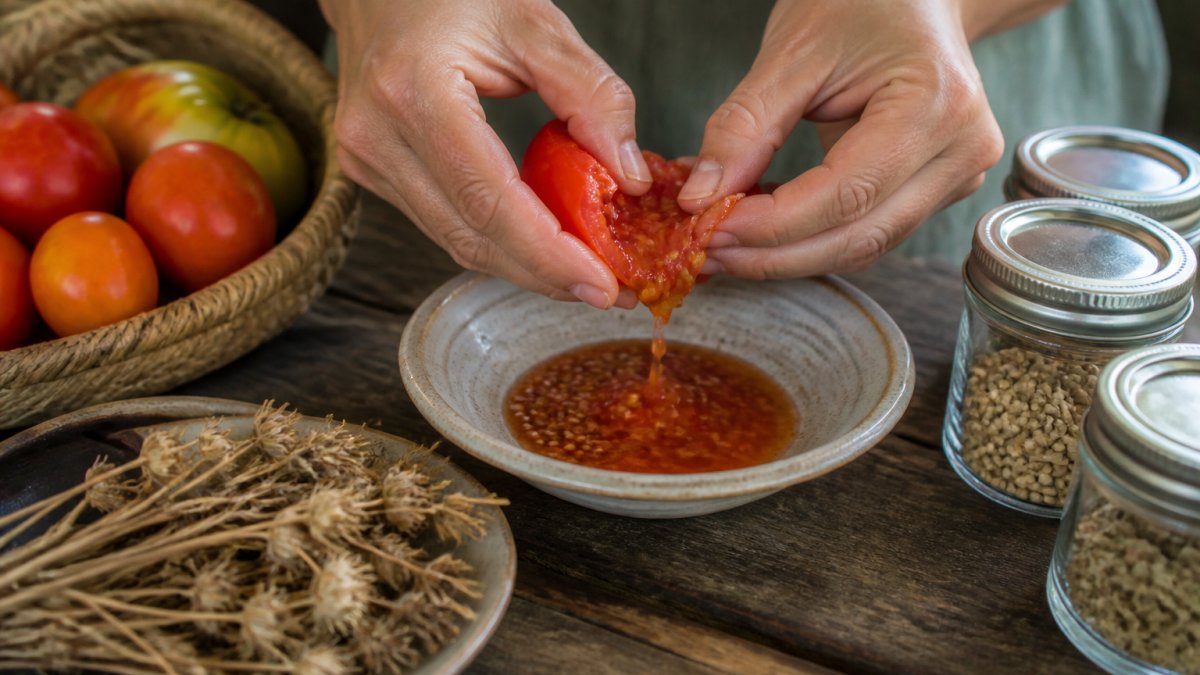
The process varies by plant type, but the principle is consistent: let plants reach full maturity, harvest seeds when dry and hard, clean them thoroughly, dry them completely, and store them cool and dry.
Many gardeners recoup their initial seed investment within a single growing season. A packet of heirloom tomato seeds (typically 20-50 seeds) yields plants producing 50-100 tomatoes each, and each tomato contains 100-300 seeds.
The Seed Growing Guide included with ARK Seed Kits products provides detailed instructions for saving seeds from every variety in the collection, covering variety-specific techniques, timing, fermentation protocols, and storage methods.
Heirloom Seed Germination Rates and Long-Term Storage Value
Heirloom seeds are built for longevity. With proper storage, many varieties remain viable for 5, 10, or even 20+ years, and that long-term viability helps justify the higher upfront cost.
Germination rates for properly stored heirloom seeds typically stay above 70-80% after several years. Beans, peas, and certain squashes maintain rates above 90% for a decade or more, so you can buy seeds once and rely on them for years, spreading the cost across multiple growing seasons.
Storage conditions matter enormously. Seeds kept cool (50-70°F), dry (below 40% humidity), and dark remain viable far longer than seeds in warm, humid environments. ARK Seed Kits packages seeds in sealed PVC tubing designed for long-term storage, protecting them from moisture and temperature fluctuations that degrade germination rates.
For emergency preparedness, this long-term viability is invaluable. Seeds stored properly in a cool basement or root cellar can remain viable for decades.
Building Food Security Without Breaking the Budget
The highest upfront cost for heirloom seeds comes from purchasing in bulk or buying comprehensive collections. But this bulk approach is precisely what makes long-term food security affordable.
Our Backyard Seed Kit at $99 contains over 20,000 seeds across vegetables, herbs, and culinary varieties, less than $0.01 per seed across a full growing season. The All-In-One Seed Kit at $249 includes 50,000 seeds, bringing the per-seed cost to $0.005.

Many gardeners build seed security gradually: start with a smaller collection like the Backyard Kit, grow and save seeds from your harvest, and expand your varieties over time. This spreads costs across multiple seasons while building knowledge and confidence.
For serious emergency preparedness, the Prepper Special offers five All-In-One kits for the price of four, letting you build redundancy and geographic distribution. Multiple seed collections stored in different locations protect against loss.
The real economy of heirloom seeds emerges over years, not months.
Heirloom Seed Germination Rates and Long-Term Storage Value
Germination reliability is where heirloom seeds prove their value most clearly. Unlike hybrids, often bred for single-season performance and poor long-term viability, heirloom seeds are designed to persist.
Properly stored heirloom seeds typically maintain germination above 70% after 5 years and above 50% after 10 years. Beans, peas, and squashes can stay at 80%+ germination for 15+ years, so you can plan long-term food security with confidence.
The storage advantage compounds when you save seeds from your own plants. Seeds you harvest and dry yourself, stored in optimal conditions, often outperform commercially stored seeds: they're fresher, adapted to your local growing conditions, and free from commercial processing and shipping stress.
Building Food Security Without Breaking the Budget
Food security through heirloom seeds doesn't require unlimited spending. The key is understanding value over time.
A single heirloom plant produces enough seeds for multiple years of gardening: a tomato plant yields 1,000-3,000 seeds, a bean plant 200-500.
Start with what you can afford now. The Backyard Seed Kit provides comprehensive variety at $99; the All-In-One Seed Kit offers maximum diversity at $249. Both are designed for long-term storage and seed-saving.
From there, your investment becomes self-sustaining. Each season, you harvest seeds from your plants. Each year, your seed library grows. Within 3-5 years, you'll have years' worth of seeds stored and the knowledge to maintain them indefinitely.
Building genuine food security through heirloom seeds requires upfront investment, but it compounds. You're not paying for seeds; you're paying for the ability to grow your own food reliably, year after year, without dependence on external supply chains.
Frequently Asked Questions
Why do heirloom seeds cost more than regular seeds?
Heirloom seeds are more expensive because they require hand-pollination, manual harvesting, and careful isolation to maintain genetic purity. Unlike hybrid seeds produced in massive industrial batches, heirloom seed producers work with smaller quantities and stricter quality controls. The cost also reflects the time and expertise needed to preserve these varieties year after year without cross-contamination.
Are heirloom seeds worth the extra cost?
Yes, if you plan to save seeds for future seasons. A single $249 All-In-One kit contains 50,000 seeds and includes a Seed Guide teaching you how to save your own seeds. Once you harvest and store seeds properly, you eliminate the need to repurchase every year. Heirloom seeds also offer superior flavor, nutrient density, and the ability to adapt to your local growing conditions over generations.
How long do heirloom seeds stay viable in storage?
ARK Seed Kits are packaged in indestructible PVC tubing designed for 15+ years of storage. Proper storage in cool, dry conditions extends viability further. Germination rates remain high when seeds are kept away from moisture and temperature fluctuations. This long shelf life makes heirloom seeds a practical investment for emergency preparedness and multi-year gardening plans.
Can you actually save seeds from heirloom plants to regrow them?
Yes, this is a key advantage of heirloom seeds. Unlike hybrid varieties, heirloom plants produce seeds that grow true to type, meaning next year's plants will be identical to the parent. The ARK Seed Growing Guide walks you through harvesting, drying, and storing seeds for each variety. This ability to save and replant seeds year after year justifies the initial investment and supports long-term self-sufficiency.


